
Introduction
Wushu is considered one of the most prominent traditional sports in China, with an estimated more than 70 million practitioners. It is a form of Asian martial arts consisting of multiple categories of exercises, including offensive and defensive free fights between two persons [1]. Sanda is a combat event standardised from wushu that consists of three 2-minute rounds with a 1-minute rest and is characterised by full-contact punches, kicks, and throw techniques [2]. Similar to other combat sports, Sanda athletes require both explosive speed and strength [3]. The intermittent high-intensity nature of Wushu Sanda, involving repeated explosive bilateral actions such as powerful kicks, throws, and rapid directional changes, places substantial demands on lower-limb neuromuscular function [2, 3]. Given these performance requirements, Wushu Sanda athletes may be particularly susceptible to inter-limb asymmetries, which can compromise both athletic performance and increase injury risk, especially under fatigued conditions [4, 5].
In combat sports such as Wushu Sanda, inter-limb asymmetry may be defined as the variation in performance or functional capacity between the limbs [6]. These asymmetries can be categorised into anatomical, morphological, flexibility-related, strength-based, skill-related, or outcome-based domains [7]. Differences in lower-limb strength and power are particularly relevant, as they have been identified as potential risk factors for sports-related injuries [8, 9]. Beyond injury concerns, inter-limb asymmetries have also been associated with decrements in athletic performance, particularly in combat sports and martial arts, where bilateral coordination and explosive power are crucial for technique execution [10, 11]. Notably, asymmetries exceeding 15% in strength or power have been associated with elevated injury risk and impaired athletic performance [4, 12].
Exercise-induced fatigue has a significant and complex influence on inter-limb asymmetries, with implications for athletic performance and injury risk [13]. Studies on combat sports athletes have demonstrated this relationship across various martial arts disciplines. For example, research on elite male child taekwondo athletes reported increased individual inter-limb asymmetry magnitude with fatigue (countermovement jump [CMJ] height: 8.20% to 12.76%; hop distance: 6.64% to 9.59%; triple-hop distance: 5.78% to 9.69%) [14]. In addition, the authors reported significantly reduced lower-limb power in both legs across tests, i.e. CMJ height, hop distance, and triple-hop distance, with the inter-limb asymmetry increasing specifically in triple-hop distance post-fatigue, while other tests showed no such asymmetry shift [14]. Further, similar research on judokas revealed that the stretch-shortening cycle (SSC) fatigue protocol significantly increased asymmetry in peak force (from 9.8% to 15.2%) primarily for 24–48 h [15]. Another such study reported significant declines in single-leg CMJ height following repeated sprints, with the non-dominant limb more adversely affected [16].
The limited study on exercise-induced fatigue asymmetry in Wushu Sanda has revealed that performing a continuous static sidekicks technique resulted in significant fatigue in the striking leg’s power-generating muscle groups (i.e., primarily the quadriceps and gluteus maximus), whereas the supporting leg maintained stability through the tibialis anterior and gastrocnemius [17]. The fatigue-induced performance loss is explained by unequal force absorption between limbs and by a loss of frontal-plane stability, both of which are critical for force transmission and movement efficiency in combat techniques [18].
Exercise-induced fatigue appears to differentially affect the dominant versus non-dominant limb, with evidence from taekwondo athletes showing greater decrements in posterolateral reach distance when using the dominant leg for support, suggesting higher fatigue in the limb used for stabilisation during sport-specific movements [14]. This asymmetrically induced fatigue may explain the gradual decrease in technique precision and explosive power output observed during prolonged training in martial arts, where athletes demonstrate reduced kicking velocity, reduced jump height, and slower change-of-direction speed (CODS) as asymmetries develop [13, 18]. However, the extent to which fatigue influences asymmetry appears to be modulated by task characteristics, neuromuscular factors, individual baseline asymmetry, sex, and sport-specific demands [13].
Although prior research has examined fatigue and asymmetry in various combat sports, there has been only limited investigation in Wushu Sanda, a combat sport with unique anaerobic and high-intensity movement demands [19]. Wushu Sanda performance depends on explosive lower-limb actions, powerful kicks, and throws that require longer ground contact times, categorised as slow SSCs (> 250 ms), whereas rapid strikes and directional changes occur under minimal contact durations as fast SSCs (< 250 ms) [20, 21]. The dual requirement for both slow and fast SSC actions makes Wushu Sanda particularly interesting, as fatigue may differentially affect these muscle action types. It would also be of research interest to investigate whether exercise-induced fatigue influences the magnitude of inter-limb asymmetry in Wushu athletes. To date, only one study has examined exercise-induced fatigue and asymmetry in Sanda athletes using surface electromyography (sEMG) to assess muscle activation differences between the striking and supporting legs during continuous static side-kick techniques. While the study provided insights into muscle activation patterns that may inform targeted training, it offered limited information on functional performance deficits post-fatigue. In contrast, assessing fatigue via functional jumps [i.e., SJ, CMJ, and drop jump (DJ)] may provide more practical monitoring tools for coaches and practitioners than laboratory-based techniques such as sEMG. Therefore, this study aims to investigate the influence of exercise-induced fatigue on the magnitude of inter-limb asymmetries in Wushu athletes. The available evidence indicates that fatigue compromises the neuromuscular system’s ability to maintain bilateral symmetry, potentially impairing the force–time characteristics essential for explosive movements and motor tasks such as kicks, jumps, and rapid CODs, which are fundamental to Wushu athletes. Hence, the authors hypothesised that there would be a significant increase in inter-limb asymmetry magnitude across all lower limb muscle power tests [CMJ, DJ, standing broad jump (SBJ), and triple hop] in wushu athletes following a fatigue protocol, with a greater increase in DJ due to the fast SSC demands.
Material and methods
Study design
This study employed a pre-test post-test within-subjects experimental design to investigate the acute impact of fatigue on jumps and jump-based inter-limb asymmetry in Wushu Sanda athletes.
Participants
Sample size determination was conducted using an a priori power analysis via the G*Power software (Version 3.1, University of Düsseldorf, Germany), for a one-tailed paired-sample t-test, an effect size of d = 0.7, an alpha level of 0.05, and a statistical power (1– error) of 0.80, indicating a minimum requirement of 15 participants. The power analysis was conducted to detect within-subject fatigue effects on jump performance and asymmetry, without accounting for biological sex. This approach was adopted because the primary research question concerned acute fatigue effects within individuals rather than between-sex comparisons. This approach for determining participant numbers aligns with statistical practices employed in similar research examining performance asymmetries in athletes [22]. Therefore, 16 Wushu Sanda athletes (11 males, 5 females) with an age range of 18–21 years, who fulfilled the following inclusion criteria: (i) competed at the national or All India inter-university games within the past two years; (ii) had a minimum of 1.5 years of competitive and 3 years of training experience in Wushu Sanda; and (iii) had no musculoskeletal injury in last 6 months, were recruited for the study, however during the course of data collection and intervention, one athlete was unable to complete the fatigue protocol, and another voluntarily withdrew due to discomfort. Thus, a total of 14 participants (9 males, 5 females) (subject characteristics reported in Table 1) completed the study with their informed written consent, knowing the objectives and potential risks involved in the study. Sex-based subgroup analyses were not performed due to the insufficient statistical power resulting from unequal group sizes (males: n = 9; females: n = 5). All participants were analysed as a single cohort.
Table 1
Participants’ characteristics
Testing environment
All testing was conducted in the indoor Wushu training facility at Rashtriya Raksha University. Sessions took place during evening hours (5:00–7:00 p.m.) at an ambient temperature of 28.2–30°C with 33–42% relative humidity.
Procedures
Prior to the actual testing session, all the participants were tested for body composition and standing height using an ACCUNIQ BC720 multi-frequency bioelectrical impedance analyser (SELVAS Health-care, Gyeongsan, South Korea) and a Seca 213 portable stadiometer (Seca, Hamburg, Germany; range 20– 205 cm; graduation: 1 mm), respectively, followed by a familiarisation session for all the assessments, sequence, and fatigue protocols.
All testing sessions began with a standardised 8–10 min self-paced general warm-up alongside basic mobility drills, followed by 5–7 min of sport-specific warm-up consisting of 5-repetitions of squats, forward lunges, crab walks, glute bridges, foot-fire and pogo jumps, and shadow sparring, kicks and punches performed on the mat to activate key muscle groups. After completing the warm-up, participants underwent a pre-testing assessment of bilateral and unilateral jumps.
The testing protocol was standardised across all participants, with the sequence designed to minimise fatigue-induced variability and ensure valid assessment of neuromuscular performance (Figure 1). To address the potential risk of neuromuscular fatigue from multiple jump modalities, the following methodological controls were implemented. First, all the participants completed familiarisation sessions to ensure technical proficiency across all the jump variants to avoid learning effects. The athletes also had prior experience with jump-based assessments, demonstrating familiarity with the assessments and equipment used. Referring to the demands, particularly among Wushu Sanda athletes, both slow and fast SSC muscle actions were assessed. Fast SSC evaluates reactive strength for swift CODs, evasive footwork, and ex- plosive striking with minimal ground contact (< 250 ms), while slow SSC is considered critical for kicks and throws with longer ground contact time (> 250 ms) [15]. The jump testing sequence was standardised as follows: SBJ, CMJ, DJ, unilateral CMJ, unilateral triple hop (SLTH), and unilateral SBJ for both the right and left legs. This sequence was deliberately ordered from less to more technically demanding tasks to minimise the influence of accumulated neuromuscular fatigue on performance outcomes [23, 24]. To further control the cumulative fatigue, each test was separated by a rest interval of 45–90 s, which is considered sufficient for phosphocreatine resynthesis and maintenance of maximal power output during repeated explosive efforts [25]. To monitor potential fatigue accumulation during the performance of the testing battery, ratings of perceived exertion (RPE) were collected after every three jump tests using the Borg CR-10 scale [26].
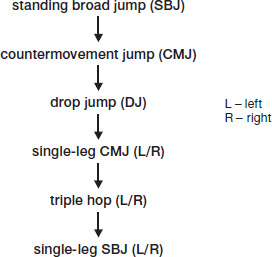
Following the pre-testing assessment, participants performed the fatigue protocol. Immediately after reaching the fatigue criterion, participants completed the same battery of bilateral and unilateral jump performance tests for post-fatigue assessment. In accordance with similar research protocols [27, 28], the interval between pre-testing, fatigue protocol, and post-testing was kept minimal to ensure that the acute effects of fatigue were captured effectively.
Horizontal jump performance
Horizontal jump performance was evaluated through three standardised assessments: bilateral SBJ, unilateral SBJ, and unilateral triple hop test, assessing slow SSC. For all three tests, participants initiated the jumps from behind a marked line, with the bilateral SBJ requiring bilateral stance with feet shoulder-width apart, while both unilateral jumps were performed with the non-jumping leg kept at the middle of the shin (i.e., medial malleolus). For unilateral jumps, the landing was performed with the same leg, and to be considered a valid jump, the participants were required to maintain balance for at least two seconds post-landing. Arm swing was allowed for all the horizontal jumps. All horizontal displacements were measured in centimetres using a measuring tape from the starting line to the posterior heel mark upon landing. For each test, participants performed three maximal attempts, with the best performance recorded for analysis.
Vertical jump performance
Vertical jump performance was evaluated utilising a reliable portable contact mat system (Chronojump Boscosystem, Barcelona, Spain) [29] across three distinct protocols, i.e., bilateral CMJ (slow SSC) and DJ (fast SSC), and unilateral CMJ. During the bilateral CMJ assessment, participants adopted a shoulder-width feet stance and hands fixed on the iliac crests to neutralise upper extremity contribution. Upon receiving a verbal cue, participants executed a rapid eccentric phase to a self-selected depth (approximately 90° of knee flexion), immediately transitioning to concentric propulsion, while maintaining lower limb extension throughout the flight phase before landing. For the unilateral CMJ test, participants established unilateral balance on the test extremity with hands stabilised on hips, performed a countermovement, generated maximal vertical displacement, and returned to the contact surface on the same limb, maintaining balance post-landing to validate the attempt. The DJ protocol required participants to descend from an elevated platform (20 cm) onto the contact mat and instantaneously perform a reactive vertical projection with minimal surface contact duration, with specific instructions to imagine the landing surface as ‘hot’ to elicit an optimal stretch-shortening cycle response. Each participant performed three maximal effort trials per jump variation with standardised inter-trial recovery, with the superior performance retained for subsequent analytical procedures.
Fatigue protocol
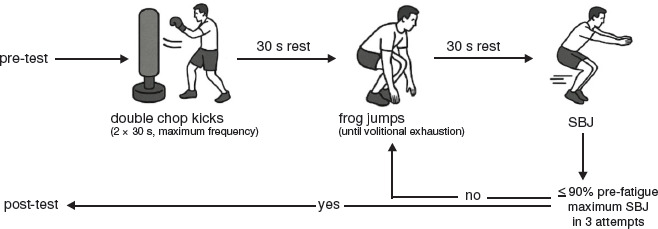
The fatigue protocol is supported by previous research, in which mimicking the physiological demands of Wushu Sanda competition was employed [14]. Each participant performed two sets of 30-second consecutive double chop kicks on a punching bag at maximum frequency, with a 30-second rest period between sets. Following completion of the kicks, participants received a 30-second rest period before performing consecutive frog jumps until volitional exhaustion. This sequence constituted one set of the fatigue protocol.
After completing one set of the fatigue protocol, participants performed the SBJ test to assess horizontal jumping performance. The criterion for fatigue was established as failure to attain 90% of the pre-fatigue maximum jump distance for three consecutive attempts [14]. If this criterion was not met, participants commenced another set of the fatigue protocol until the fatigue criterion was achieved. This approach ensured that a standardised level of fatigue was induced in all participants before post-testing. Figure 2 presents a schematic representation of the fatigue protocol.
Statistical analyses
Data were analysed for normality using the Shapiro– Wilk test. All dependent variables demonstrated normal distributions (all p > 0.05 for Shapiro–Wilk tests), confirming the appropriateness of the parametric statistical methods. Means and standard deviations were used as descriptive statistics. The intraclass correlation coefficient was calculated for between-trial (test-retest) reliability and was interpreted as poor (< 0.50), moderate (0.50–0.75), good (0.75–0.9), and excellent (> 0.90) reliability based on the lower bound of the 95% confidence interval (CI) [30]. The inter-limb asymmetry was calculated in a customised Excel spreadsheet using the formula: [(dominant – non-dominant) / dominant] × 100 [31]. A paired sample t-test was conducted to analyse the effect of the fatigue protocol on the dependent variables. Hedges’ g effect sizes with 95% confidence interval were also calculated to determine the magnitude of change (from pre to post) and were interpreted as trivial (< 0.20), small (0.20–0.60), moderate (0.60–1.20), and large (> 1.20) [32]. The level of significance was set at p < 0.05.
Results
Table 2 presents the RPE scores. The overall mean number of fatigue sets to reach < 90% SBJ was 2.14 ± 0.86, with RPE 1 and RPE 2 values of 4.50 ± 1.00 and 5.79 ± 0.91, respectively. Males recorded means of 2.67 ± 1.00, 4.22 ± 0.83, and 5.44 ± 0.53, while females recorded 1.60 ± 0.55, 5.00 ± 1.22, and 6.40 ± 1.14 for fatigue sets, RPE 1, and RPE 2, respectively. Table 3 presents the ICC with the 95% confidence interval. All variables showed good to excellent test– retest reliability. Table 4 presents the results of the statistical analysis. For bilateral jumps, significant decreases in CMJ height, DJ RSI, and SLJ distance were observed after the fatiguing protocol. However, no decrease in DJ GCT was observed. For unilateral jumps, CMJ with both the left and right legs, and SBJ with the left leg decreased after the fatiguing protocol. However, no changes were observed in SBJ with the right leg, and triple hop jump with both the right and left legs. Further, no changes in asymmetry (CMJ, SBJ, triple-hop test) were observed after the fatiguing protocol.
Table 2
Descriptive statistics for fatigue sets and ratings of perceived exertion (RPE)
Table 3
Intraclass correlation coefficient (ICC) with 95% confidence interval (CI) of trials
Table 4
Statistical comparison of outcome variables between pre- and post-fatigue
Discussion
This study aimed to investigate the acute effects of exercise-induced fatigue on jump performance and jump-related inter-limb asymmetry among national-level Wushu athletes. The key findings indicate that fatigue significantly impaired unilateral (i.e., CMJ height for both legs and SLJ distance for the left leg) and bilateral (i.e., CMJ height, DJ RSI, and SLJ distance) jump performance. However, despite these performance decrements, no statistically significant changes were observed in inter-limb asymmetry for any of the assessed jump tasks.
The reduction (albeit small magnitude effect size) in bilateral CMJ height, DJ RSI, SBJ distance, unilateral CMJ height, and SBJ distance can be explained by the central and peripheral neuromuscular fatigue caused by the protocol, suggesting that the protocol was effective in inducing fatigue in the athletes. For example, at the peripheral level, the fatigue protocol may have caused metabolic disturbances, and a lack of excitation–contraction coupling, caused by factors such as decreased Ca2+ ion release, changes in the muscle stiffness (during the eccentric phase), leading to a decline in reflex sensitivity [33–35]. These changes in peripheral factors due to fatigue may reduce the force-production capability and alter the force-time characteristics (e.g., rate of force development, flight time: contraction time ratio, eccentric force, etc.) [36, 37]. Indeed, CMJ height is reported to be a valid and reliable tool to assess neuromuscular status [38], due to its sensitivity in detecting fatigue [5]. Moreover, the DJ and SBJ tests have also been used in determining the neuromuscular status of individuals [5, 39], and the current findings suggest that both assessments are sensitive enough to detect fatigue in Wushu athletes. Indeed, in line with the current findings, a previous study reported a significant decrease in unilateral CMJ, SBJ, and triple hop performance following a fatiguing protocol in elite child taekwondo athletes [14]. Of note, no difference in the DJ GCT was observed, suggesting its insensitivity to measuring acute fatigue. In contrast, DJ RSI appears to be sensitive to fatigue monitoring.
Furthermore, the findings also suggest a significant reduction in unilateral CMJ height for both legs, while SBJ decreased for the left leg alone. The reductions in jump height and distance may be explained by similar factors to those discussed in the previous paragraph (for bilateral jumps). However, non-significant reductions were noted in SBJ right and unilateral triple hop for both legs. This stands in contrast to the findings of a previous study, which reported a significant decrease in unilateral SBJ and triple hop distance after a fatiguing protocol in young taekwondo athletes aged 10 years [14]. These differences may be explained by differences in the participants’ characteristics. For example, Guan et al. [14] included 10-year-old participants with at least one year of training experience, while the current study involved adult participants who competed at the national level and had at least three years of training experience in the sport. Although we did not record the dominant limb of the participants, it is plausible that athletes’ training experience made them more resistant to fatigue in the right limb, at least for SBJ.
Another key finding was the absence of jump-based inter-limb asymmetry after the fatiguing protocol. A previous systematic review that aimed to aggregate literature on the effects of fatigue on inter-limb asymmetry reported inconsistencies in the findings in the literature [13]. These inconsistencies in the findings and difficulty in reaching a conclusion were attributed to differences in study designs, fatiguing protocols, or outcome tasks [13]. Therefore, comparing our current findings with a similarly conducted study on young taekwondo athletes with a replicable fatiguing protocol and outcome task [14], the findings appear to be similar. For example, Guan et al. [14] reported no significant difference in inter-limb asymmetry measured through unilateral CMJ and SBJ after a fatiguing protocol. A plausible reason for this finding is that both legs were equally fatigued after the protocol [14]. Moreover, it should also be noted that the inter-limb asymmetry of the participants in the current study is in line with previous studies (< 15% asymmetry) on combat athletes (i.e., fencing and taekwondo) [14, 40]. This asymmetry ratio before and after the fatiguing protocol is indicative of the occurrence of some form of asymmetry in humans [41].
Although the current study’s findings are novel, as it is the first acute fatigue study conducted on Wushu athletes, there are a few limitations that should be acknowledged. Firstly, due to a smaller number of female participants (n = 5), a subgroup analysis using biological sex as a moderating factor could not be conducted. It is well established that biological sex may affect the fatigue response [42–44], and therefore, the response to the fatiguing protocol may be different between males and females. Secondly, the participants were adult national-level athletes. The findings may be different for young athletes (due to the maturation process) and athletes from other participation levels (e.g., amateur). Thirdly, the vertical jumps (i.e., CMJ and DJ) were assessed using a contact mat, providing the jump height data. However, the use of a force platform would provide additional force–time data (e.g., peak eccentric force, rate of force development, take-off velocity) that could help in understanding the changes in the kinetics and kinematics caused by the fatiguing protocol. Fourthly, the analysis of basal blood biochemical variables (e.g., creatine kinase) could also help understand the metabolic changes (e.g., muscle damage) occurring in the body due to the fatiguing protocol. Fifthly, the study administers an individualised fatigue criterion (SBJ drop < 90% of baseline), resulting in a difference in workload volume before the fatigued stage. This could potentially influence the observed asymmetry in athletes. However, this individualised approach was chosen to ensure that all participants reached a comparable level of fatigue relative to their own baseline capacity, which is more ecologically valid for representing true fatigued states across athletes with different conditioning levels. Lastly, the study should be seen as an exploratory attempt to study inter-limb asymmetry in scarcely studied Wushu athletes. Further, the authors also acknowledge the neuromuscular fatigue from multiple jump modalities as a limitation of the present study. Future confirmatory studies with larger sample sizes and controlled neuromuscular fatigue are recommended.
Conclusions
The fatigue protocol significantly impaired both bilateral and unilateral jump performance, as evidenced by small effect size reductions in CMJ height, RSI during DJ, and SBJ distance. However, the inter-limb asymmetry remained statistically unchanged post-fatigue. Therefore, monitoring the asymmetry to detect fatigue may not be suitable as it is not sensitive to fatigue. Coaches and practitioners may rely on absolute performance values to detect fatigue.