Introduction
Football, as an invasion-based team sport, is characterised by a high density of events and constant interpersonal interactions, requiring players to execute complex technical and motor actions under dynamic conditions [1]. Throughout a match, players must jump, kick, turn, tackle, vary pace, accelerate and decelerate while continuously perceiving and responding to evolving environmental information [2–5]. These multidimensional demands compel coaches to design training processes that optimise physical, technical, tactical, and cognitive development in an integrated manner.
In this context, small-sided games (SSGs) have emerged as a prominent training strategy, as they enable practitioners to manipulate player numbers and pitch dimensions to elicit specific physiological and perceptual responses [6, 7]. By adjusting task constraints and recovery intervals, SSGs can approximate competitive conditions and enhance decision-making and tactical understanding [8]. Consequently, SSGs are frequently associated with ecological dynamics principles, as they may facilitate integrated and representative adaptations to the demands of competitive football [9, 10]. From this perspective, the manipulation of constraints, such as space, player numbers, and tactical objectives, may influence players’ perceptual–motor behaviours and decision-making processes. Similarly, motor praxeology conceptualises football through its internal logic, highlighting how structural relations between players, rules, space, and time shape the functional organisation of the game [11, 12].
Despite the supposed structural resemblance to official competition, SSGs vary considerably in their configuration. Differences in pitch size, number of players, goal arrangements, and rule modifications substantially alter the physical, technical, tactical, and psychological demands imposed on players [7, 13, 14]. For instance, smaller playing fields with fewer participants may increase the frequency of high-intensity accelerations and decelerations, whereas larger formats facilitate greater distances covered and higher peak running speeds [8]. As a result, the degree of specificity compared to competitive play fluctuates across SSG formats. Nevertheless, although coaches intentionally manipulate these constraints to shape specific training outcomes, systematic and operational methods capable of objectively quantifying the representativeness of training tasks remain limited in the applied football contexts. In this regard, deriving a Structural Specificity Index may provide practitioners and researchers with a structured framework for comparing exercises according to their structural similarity to the official competition.
In this sense, several attempts have been made to conceptualise and classify structural specificity in team sports. Solé [15] proposed a theoretical model; however, it lacks clearly operationalised indicators and has not undergone empirical validation. In turn, Ibáñez et al. [16] introduced a flexible framework applicable across sports, yet its extensive data requirements reduce its practical feasibility. Similarly, Camenforte et al. [17] developed a classification system based on 28 criteria, derived from exercises performed by a single team, which may limit both its practical applicability in daily training contexts and the generalisability of the system. Díaz et al. [18] grounded their proposal in the internal logic of the game, although without reporting empirical reliability or validation procedures. Moreover, previous proposals have generally focused on conceptual classifications, with limited attention paid to practical applicability across coaching contexts or to the integration of structural variables into a unified scoring system.
Given these limitations, a clear need emerges to differentiate and quantify training exercises within a holistic framework that reflects the complexity of football. Contemporary perspectives advocate integrating physical, technical, tactical, and cognitive dimensions when assessing performance and designing training [13, 19], thereby encouraging self-organisation and adaptive behaviour in response to emergent game situations [20]. Accordingly, the present study aimed primarily to examine the intra- and inter-observer reliability of a structural task-classification system designed to classify the structural characteristics of football training tasks. A secondary objective was to present the procedures used to derive a SSI at both exercise and session level. We hypothesised that structural elements embedded within the internal logic of official competition could provide a sufficiently stable basis for classifying structural specificity in football training tasks. Although integration of this index into load-monitoring frameworks may enhance training prescription, the present study focused specifically on establishing reliability. By doing so, this research sought to provide a methodological foundation for future investigations combining representativeness and workload metrics, thereby supporting evidence-based design of football training tasks.
Material and methods
Experimental approach to the problem
This investigation adopted a cross-sectional design to evaluate the intra- and inter-observer reliability of the 3D Training Control® (3D-TC) tool. 3D-TC is a webbased tool that incorporates a structural task-classification system for assessing the structural specificity of football training tasks and deriving a SSI. For the present assessment, experienced coaches used the 3D-TC tool to classify the structural characteristics of training exercises, and repeated evaluations were compared to determine consistency over time and between raters. All data collection procedures conformed to ethical standards. The head coach and club management provided informed consent for the use of training data, and no personal identifying information was collected.
Construction procedures
Development of the structural task-classification system followed a structured content validation process. Five experts were recruited based on their research and coaching credentials: four held doctoral degrees in sport science (10 years’ experience), while one held a master’s qualification in coaching (15 years’ experience). One of these five experts was a UEFA (Union of European Football Associations) Pro-licensed coach with more than a decade of professional coaching experience, three were UEFA B coaches (6 years’ experience), and one was a UEFA C coach (5 years’ experience). All were 40 years of age on average. The first version of the 3D-TC tool was distributed by email. Experts were then given two weeks to evaluate the structure, clarity, and applicability of each criterion. They all returned their feedback, recommending minor adjustments to wording and categorisation. These suggestions were incorporated to enhance clarity without altering the theoretical framework. To generate data for reliability testing, the coaching staff of a professional club competing in the second division provided documentation of a competitive mesocycle (four micro-cycles) from the 2022–2023 season. This dataset comprised 19 training sessions, four official matches, and 113 exercises.
Structural task-classification system embedded in the 3D-TC tool
The structural task-classification system embedded in the 3D-TC tool is grounded in the theory of motor praxeology [21], which conceptualises games and sports through their internal logic the system of relationships that governs interactions between players. Internal logic provides an “identity card” for each game, requiring players to resolve relations with others, with physical space, with time, and with materials. Drawing on this framework, and following the classification of internal logic parameters for football [22], the tool organises the analysis of training tasks into five macrostructures presented below, and detailed descriptions of their corresponding elements are presented in Table S1 of the Supplementary material:
Temporal elements: date, microcycle (MC), number of contests in the MC (NCMC), session (Ss) and exercise number (EN).
General objectives: general principles of orientation for the exercises (GPOE), reference game situations and others (RGSO), and game principles to be developed in the exercise and others (GPDEO).
Density: number of repetitions, duration per repetition, pause time, total duration, and density (percentage of effective work time).
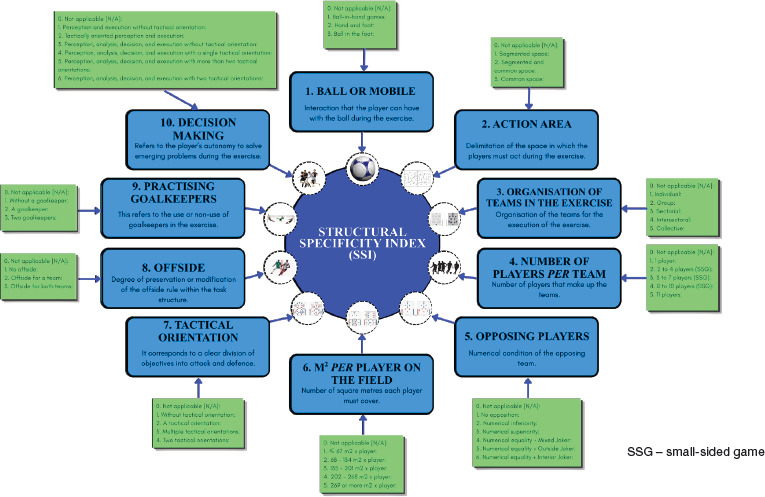
Structural elements of the game’s internal logic: ten parameters capturing structural constraints (Figure 1); (1) ball or mobile (BoM), (2) action area (AE), (3) organisation of teams in the exercise (OTE), (4) number of players per team (NPT), (5) opposing players (OP), (6) m2 per player on the field (m2-PF), (7) tactical orientation (TO), (8) offside (OS), (9) practising goalkeepers (PGK), and (10) decision making (DM).
Results: indices derived from the above variables: an Absolute Structural Specificity Index (ASSI) (sum of the ten internal logic elements), TSSI-1-10, DSSI, and the CSSI of the Exercise to the Session (CSSIE-Ss).
Figure 1
Ten elements of the internal logic of the game used to determine the of Structural Specificity Index (SSI) of the game and training exercises
The CSSIE-Ss is calculated by multiplying its total duration by its transformed specificity score and dividing by the sum of durations for all exercises in that session. For example, if an exercise lasts 12 min and receives a transformed score of 7, and the total session time is 65 min, its contribution is 84 divided by 65. The session SSI (SsSSI) was developed as an exploratory procedure to estimate the overall structural representativeness of a training session by integrating the contribution of each exercise according to its duration and transformed specificity score. The SsSSI should be interpreted as a descriptive indicator representing the cumulative structural representativeness of the training session, whereby higher values reflect a greater proportion of exercises structurally aligned with official competition constraints. Although this proposal has not yet been empirically validated, it is intended as an operational framework to support future investigations examining the interaction between structural specificity and training load. Furthermore, the present study focused primarily on reliability outcomes rather than on empirical validation of the SsSSI itself.
Explanation of results:
Absolute SSI = 10 elements
TSSI-1-10
CSSIE-Ss
Total duration of the exercise (TDex)
Example: CSSI-Ss
CSSIE-Ss = TDex × TSSI-1-10 / TDex.1 to ex.5
CSSIE-Ss = (12’ × 7) / (65’) CSSIE-Ss = 2.4
SsSSI
Example: Training session with five different exercises
SsSSI = CSSIE-Ss (1) to (5)
SsSSI = 0.1 + 0.1 + 0.8 + 2.4 + 2.7 SsSSI = 6.1
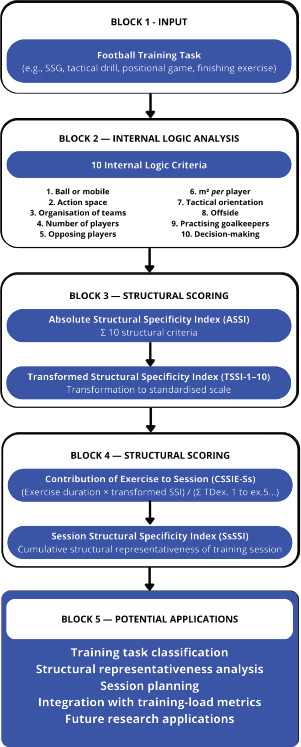
Figure 2 illustrates the conceptual workflow of the 3D-TC tool and its structural task-classification system. The proposed indices should be interpreted as exploratory operational measures that require further validation.
Figure 2
Conceptual framework of the 3D Training Control® tool and its structural task-classification system for deriving the Structural Specificity Index (SSI) in football training tasks
In this study, specificity is operationalised as the structural representativeness of a training task relative to competition constraints, such as space, number of players, opposition, targets, and task goals. This definition emphasises objectively observable configurations. Nevertheless, ecological factors, such as information, movement, and coupling, are influenced by these structural constraints. The 3D-TC structural task-classification system uses official competition as the reference for maximal structural similarity. Modifying any of the ten internal logic criteria makes an exercise more or less specific depending on its proximity to competitive conditions. Training tasks may be intentionally designed to depart from, or selectively represent, competitive environments in order to emphasise particular technical, tactical, physical or psychological constraints and facilitate learning [23–25]. Representative learning design highlights that the fidelity of training tasks and their cognitive and physical load should be balanced to optimise learning transfer and avoid overtraining [26]. Accordingly, the Structural Specificity Index should be understood as a pragmatic approximation of structural similarity. The decision to weight the ten criteria equally constitutes a methodological starting point, not an assertion that each criterion exerts an identical influence on the resulting Structural Specificity Index score.
Reliability tests
Two trained observers participated in the reliability assessment. After receiving approximately 90 min of instruction on how to use the 3D-TC tool and apply its structural task-classification criteria, each observer independently coded every exercise from the meso-cycle, then repeated the procedure three weeks later to minimise recall effects [27]. The temporal separation helps control for memory bias and provides a conservative estimate of intra-observer consistency. This data-set comprised 19 training sessions and four official matches included as contextual elements of the analysed mesocycle. The reliability analysis was conducted exclusively on the 113 training exercises performed during the training sessions.
Statistical analysis
Intra-observer and inter-observer agreement were assessed using Cohen’s kappa coefficient. Agreement was interpreted according to the following criteria: no agreement ( 0), no or low agreement (0.01–0.20), fair agreement (0.21–0.40), moderate agreement (0.41–0.60), substantial agreement (0.61–0.80), and almost perfect agreement (0.81–1.00) [28].
The intraclass correlation coefficient (ICC) was analysed to calculate intra-observer and inter-observer reliability. The ICC estimates and their 95% confidence intervals were analysed using a two-way mixed-effects model for the mean score, absolute agreement [29].
All information was recorded in an Excel document (Microsoft Office 365, version 2020). All analyses were carried out using the Statistical Package for Social Sciences Version 26.0 (SPSS Inc., IBM Company, Armonk, NY, USA).
Results
The intra-observer analysis of the ten indicators demonstrated very high consistency (Table 1). Observer 1 achieved almost perfect agreement across all indicators, while observer 2 reached almost perfect agreement on nine indicators and substantial agreement on the remaining one (p < 0.001). The intraclass correlation coefficients (ICC) calculated for intra-observer reliability are provided in Table 2 and corroborate these findings, reflecting excellent reproducibility of the repeated assessments performed by the same observer. Notably, the highest agreement values were observed for the criteria with more objective structural definitions, such as the number of players and tactical orientation, whereas slightly lower values were identified for the variables requiring greater contextual interpretation, such as opposing players.
Table 1
Intra-observer agreement for each criterion of the internal logic of the game
Table 2
Intra-observer reliability and variability for each criterion of the internal logic
Inter-observer results revealed similarly robust agreement (Table 3). At the initial assessment, nine of the ten indicators exhibited almost perfect agreement between observers, with one indicator showing substantial agreement. At the second assessment, agreement for all indicators was almost perfect (p < 0.001). The ICCs summarised in Table 4 confirm the high degree of inter-observer reliability. Despite minor variations between indicators, all criteria demonstrated acceptable levels of agreement, supporting the consistency of the structural task-classification system across repeated assessments.
Table 3
Inter-observer agreement at moment 1 and moment 2 for each criterion
Table 4
Inter-observer reliability and variability at moment 1 and moment 2 for each criterion
Discussion
The primary aims of this research were to develop the 3D-TC tool as a means of quantifying the structural specificity of football training tasks, and to evaluate its reliability. The structural task-classification system embedded in the tool demonstrated high intraand inter-observer reliability and provided a structured procedure for deriving a SSI.
Reliability as a foundation for future research
Before any assessment tool can be deployed for scientific or applied purposes, its reliability must first be established [30]. In this study, the structural task-classification system embedded in the 3D-TC tool exhibited near-perfect intra- and inter-observer agreement, with values of kappa and ICC exceeding thresholds, indicative of excellent reliability [29, 31]. Such high reliability is critical because, as it indicates that different observers will obtain consistent SSI scores when analysing the same training exercise, and that repeated analyses by the same observer will yield stable results [32, 33]. Establishing reliability represents an essential preliminary step towards examining the validity of the SSI. It further provides coaches and researchers with the confidence to apply the tool in practice and to build upon its framework in future studies. Without a reliable structural task-classification system, subsequent attempts to assess structural specificity, evaluate training programmes or integrate the tool into monitoring systems would lack a sound evidential basis. The consistency demonstrated by the 3D-TC tool provides an initial methodological foundation for its further development and for comparative research across teams and contexts.
Rationale for equal weighting of structural criteria
The structural task-classification system embedded in the 3D-TC tool assigns equal weight to each of the ten internal-logic criteria (e.g., action space, number of players, opposing players, tactical orientation, etc.). This choice reflects a pragmatic methodological decision [34]. In the absence of empirical evidence about the relative importance of each criterion, equal weighting provides a simple and transparent way to aggregate the structural components into a single SSI [34, 35]. This simplicity is valuable for practitioners, allowing them to compute the index quickly and to interpret it intuitively [36]. However, equal weighting does not imply that each structural element contributes equally to the representativeness of a task, rather, it represents an initial assumption [34]. Future research should examine the empirical contribution of each criterion to structural specificity, potentially using statistical approaches (e.g., factor analysis or regression models) to derive data-driven weighting schemes based on the association of each criterion with performance or load variables. Nevertheless, the current proposal provides an initial operational framework that may support future investigations and applied practice aimed at advancing the understanding of structural specificity in football training tasks.
Representativeness and the SSI
The concept of representativeness stems from representative learning design, which proposes that skill transfer is optimised when practice tasks preserve the key informational constraints of competition [23, 25, 37, 38]. Under this view, the closer the resemblance between the perceptual–motor environment in training and the competitive game, the greater the opportunity for players to attune to game-relevant information and calibrate their actions accordingly [23, 39]. However, representativeness exists on a continuum and must be balanced against the physical and cognitive loads imposed by each exercise [26]. Highly representative tasks may enhance skill transfer, although they may also increase physical and cognitive demands. Conversely, less representative drills may fail to stimulate the perception–action coupling required in matches [26]. The SSI operationalises representativeness by quantifying how closely the structural elements of a training task (e.g., space, player numbers, opposition, and goals) mirror the internal logic of football [21, 22]. By scoring exercises on ten criteria and transforming these scores to a common scale, coaches can compare the relative representativeness of different drills, design sessions that progressively approximate match conditions, and monitor how structural fidelity interacts with other load metrics.
Ecological dynamics and non-linear training design
The ecological dynamics framework proposes that skilled behaviour emerges from the interaction between performer, task, and environmental constraints, rather than from pre-programmed actions [40, 41]. This perspective emphasises how athletes continuously adapt their behaviour through interactions with constraints, enabling them to perceive and exploit relevant affordances. It is closely aligned with the constraints-led approach, which advocates the systematic manipulation of constraints to promote functional and adaptable movement solutions [38, 41]. Manipulating variables such as pitch dimensions, rules, or opposition allows coaches to shape desired behaviours and guide players’ actions [37]. In football, the internal logic of the game reflects the interaction between players, space, time, and rules [21, 22]. By modifying these elements, practitioners can create learning environments that encourage self-organisation and non-linear adaptation [42]. Within this framework, 3D-TC’s SSI provides a practical method for characterising the structural constraints of exercises and positioning training tasks along a continuum from highly representative to more exploratory settings. Consequently, integrating structural specificity with ecological dynamics may support the design of training sessions that are both representative and adaptable.
Study limitations and future research avenues
While the structural task-classification system embedded in the 3D-TC tool provides a novel, reliable procedure for assessing the structural specificity of football training tasks, several limitations should be acknowledged. First, the reliability assessment was conducted on a single professional club’s mesocycle using two trained observers, limiting the generalisability of the findings across different teams, playing levels, age groups, and cultural contexts. Furthermore, the present study focused exclusively on reliability outcomes and did not examine construct validity, criterion validity, or associations between SSI scores and performance-related variables. The equal weighting of the ten structural criteria represents a pragmatic starting point, not an empirically derived model; as such, the current SSI may oversimplify the relative influence of individual constraints on representativeness and learning.
Future studies should replicate the reliability tests across diverse samples, explore alternative weighting schemes, and examine the predictive validity of the SSI by linking it to performance outcomes, player development, and injury incidence. Investigations that integrate structural measures with internal load metrics (e.g., rating of perceived exertion) and explore how representativeness interacts with ecological dynamics variables (e.g., affordance perception, decision-making accuracy) could provide a more holistic understanding of training design. Finally, the proposed three-dimensional load equation (volume × intensity × specificity) remains conceptual; its utility and relationship with player health and performance should be tested empirically in longitudinal studies.
Conceptual examples illustrating the integration of structural specificity into three- and four-dimensional load estimations were developed as supplementary exploratory models (Figures S1 and S2 in Supplementary material). These examples are intended solely to illustrate potential future applications of the SSI within integrated training-load frameworks and should not be interpreted as validated monitoring procedures.
Practical applications
By translating qualitative judgements about drills into a single SSI, the 3D-TC tool may assist coaches in designing training sessions that more closely reflect selected structural characteristics of match play. The SSI can be integrated with standard load metrics to capture the volume, intensity, and specificity of each exercise, thereby potentially contributing to a broader understanding of training demands. Because the structural classification criteria and scoring procedures are transparent, practitioners can quickly adjust variables such as pitch size, player numbers, and opposition to achieve the desired level of representativeness. Using the SSI across micro-cycles and age groups may improve session planning, align practice with club philosophy, and help manage fatigue and injury risk.
Conclusions
The 3D-TC tool demonstrated high intra- and inter-observer reliability for classifying the structural characteristics of football training tasks and deriving SSI at both the exercise and session levels. These findings provide initial support for the consistency of the structural task-classification system and establish a methodological foundation for its application in research and practice.
By focusing on objectively observable structural constraints rather than subjective judgements, 3D-TC offers a transparent and flexible framework for quantifying the representativeness of football training tasks relative to competition constraints. The tool may provide practitioners with a structured framework for examining the structural characteristics of football training tasks and for supporting the systematic organisation of exercise design according to specific contextual and tactical objectives. Furthermore, the structural task-classification system may be adapted to other invasion sports that share comparable internal-logic structures.
Although the present study was limited to reliability testing, integrating structural specificity into broader monitoring systems that include volume and intensity metrics may contribute to a more comprehensive understanding of training processes. Future research should examine the validity of the SSI and explore its relationships with performance, development, and injury-related outcomes. In this regard, 3D-TC provides an initial methodological framework for advancing the analysis of football training design.