Introduction
Hamstring strain injuries (HSIs) rank among the most prevalent and clinically demanding musculo-skeletal disorders in contemporary sport, significantly affecting performance, rehabilitation outcomes, and recurrence rates across diverse athletic populations [1]. Accounting for up to 37% of all muscle injuries, HSIs are especially common in sports entailing high-speed running, rapid accelerations, and kicking, such as soccer, rugby, and track and field [2, 3]. These injuries typically occur during a forceful eccentric contraction when the muscle is lengthened, for instance during the late swing phase of sprinting [4, 5]. HSIs impose substantial consequences, including prolonged time lost from competition, impaired athletic performance, con- siderable financial burden, and a markedly high risk of recurrence, with some reports indicating rates up to 63% [6, 7]. Given their high incidence and clinical impact, the development of evidence-based strategies for both prevention and rehabilitation of HSIs remains a critical priority for clinicians, coaches, and athletes.
Emerging research has identified multiple modifiable risk factors, with low eccentric hamstring strength being a primary target for intervention [8, 9]. The Nordic Hamstring Exercise (NHE), i.e., a high-intensity eccentric exercise, has emerged as the most extensively investigated preventive strategy. Meta-analyses have reported a substantial reduction in hamstring injury risk with programmes incorporating the Nordic Ham-string Exercise; for example, van Dyk et al. [10] reported an overall injury risk ratio of 0.49 (95% CI 0.32– 0.74; p = 0.0008) for interventions including the NHE versus control conditions [10, 11].
Mechanistically, the NHE appears to act not only as a strength stimulus but also as a driver of hamstring architectural remodelling that is considered relevant to injury prevention. In a recent randomised trial, six weeks of twice-weekly eccentrically biased training increased biceps femoris long head fascicle length and hamstring cross-sectional area, with comparable adaptations observed after either NHE or an eccentrically biased Romanian deadlift programme [12]. In soccer players, a contemporary systematic review and meta-analysis further suggests that training volume may be a key determinant of architectural change: higher-volume Nordic programmes are more consistently associated with increases in fascicle length and muscle thickness, whereas lower-volume protocols may still improve peak eccentric strength without meaningful architectural changes [13]. Importantly, the potential relevance of these adaptations extends beyond isolated strength outcomes, as a 4-week eccentric NHE intervention has also been reported to improve static and dynamic postural balance alongside knee strength [14]. In contrast, managing an acute HSI focuses on safe and accelerated return to sport (RTS) while minimising reinjury risk. The Askling L-Protocol, consisting of the Extender, Diver, and Glider exercises, was specifically designed for rehabilitation, targeting dynamic loading of the hamstrings during extensive lengthening [6, 15]. While the NHE and L-Protocol are well supported individually, their evidence bases have largely been examined in isolation, leaving a gap in understanding their combined or complementary roles across the injury continuum.
Beyond eccentric strength, recent evidence suggests that hamstring strains are often the result of neuro-muscular coordination deficits rather than isolated structural weakness. For example, Schuermans et al. [16] demonstrated that higher activation of the gluteus maximus and trunk muscles during sprinting significantly reduced the likelihood of subsequent hamstring injury, with a 10% increase in activation corresponding to an approximate 20% and 6% reduction in injury risk, respectively [16]. Optimal timing, sequencing, and magnitude of hamstring and trunk muscle activation are associated with a reduced risk of injury [16, 17]. Similarly, increased passive hamstring stiffness, particularly in the semimembranosus, can compromise the muscle’s functional capacity to absorb stretch energy and predispose it to injury [18, 19]. Interventions such as sprint-specific drills and eccentric training can enhance neuromuscular coordination and reduce injury incidence by 50–65% [16, 20]. Despite this body of evidence, the extent to which the NHE and L-Protocol influence motor control and stiffness remains poorly defined.
Therefore, this systematic review aims to synthesise and contrast the evidence for the two most prominent eccentric exercise protocols in hamstring injury management. The primary objective is to evaluate the effectiveness of the NHE in preventing HSIs and the L-Protocol in accelerating rehabilitation and RTS after acute HSIs. A secondary objective is to examine how these protocols may affect neuromuscular coordination and hamstring stiffness, providing a more comprehensive understanding of their roles across the injury prevention and rehabilitation spectrum.
Material and methods
Protocol and registration
This systematic review was conducted and reported in accordance with the Preferred Reporting Items for Systematic Reviews and Meta-Analyses (PRISMA) 2020 statement [21]. The review protocol was prospectively registered with the International Prospective Register of Systematic Reviews (PROSPERO; registration number: CRD420251128030).
Eligibility criteria
The inclusion and exclusion criteria were established a priori based on the Population, Intervention, Comparison, Outcomes, and Study Design (PICOS) framework to address the research question (Table 1).
Studies were excluded if they met any of the following criteria: (1) the article type was a review, meta-analy- sis, case report, commentary, or study protocol; (2) the language of publication was not English or Persian; and (3) the publication date was before 1 January 2010.
Athletes were defined as individuals actively participating in organised sport training and/or competition in sports characterised by high-speed running, acceleration, and/or kicking, as described in the included studies, across youth and adult age groups and across competitive levels. The primary outcomes pre-specified for this review were hamstring injury incidence/recurrence and time to return to sport/return to play. Secondary outcomes included neuromuscular and biomechanical adaptations (e.g., eccentric or isometric hamstring strength) and sport-specific performance outcomes.
Table 1
PICOS eligibility criteria
Information sources and search strategy
A systematic and comprehensive search of the literature was conducted across four primary electronic databases: PubMed/MEDLINE, Scopus, Web of Science, and the Physiotherapy Evidence Database (PEDro). To identify grey literature, as well as relevant Persian-language articles, Google Scholar was also searched. The search included all relevant articles published between January 2010 and April 2025. To ensure a thorough search, the reference lists of all included articles and relevant systematic reviews were manually screened to identify any additional studies that may have been missed during the initial database search.
The search strategy was developed based on the PICOS framework, combining thesaurus terms [i.e., Medical Subject Headings (MeSH)] with free-text keywords. Keywords used for the search, in English and their Persian equivalents, included terms related to the problem and population (e.g., hamstring injuries, tendinopathy, athletes, football, soccer, sprint) and the intervention (e.g., Nordic, Askling, L-Protocol, eccentric training, eccentric exercise, strength, performance, return to sport). These concepts were combined using the Boolean operators “AND” and “OR”. The complete search strategy for PubMed, which was adapted for use in other databases, is provided in Table 2. Searches were last run on 1 April 2025. Preprint servers and trial registries were not searched systematically; however, we supplemented the database search by screening reference lists and using Google Scholar to identify potentially relevant records not captured in the initial searches.
Table 2
Search strategy for databases
Selection process and data extraction
Following the initial search, all identified citations were imported into EndNote 21 reference management software, where duplicate records were identified and removed. A two-phase screening process was then employed. In the first phase, two review authors (S.A. and F.I. independently screened the titles and abstracts of all unique records against the predefined eligibility criteria. Articles that clearly did not meet the inclusion criteria were excluded. In the second phase, the full texts of all potentially eligible articles were retrieved and independently assessed for final inclusion by the same two review authors. Any disagreements at either stage of the screening process were resolved through discussion and consensus. If a consensus could not be reached, a third review author (F.R.) was consulted to make the final decision.
A standardised data extraction form was developed and used to collect relevant information from all in- cluded studies. Data were extracted independently by two review authors (M.Y. and F.I.), and the results were cross-checked to ensure accuracy. Any discrepancies were resolved through discussion with a third author (F.R.). The following key data points were extracted from each study: (1) publication details: first author and year of publication; (2) study characteristics: study design and country; (3) participant characteristics: sample size, age, sex, sport, and competition level; (4) intervention details: type of exercise (e.g., Nordic Hamstring, Askling L-Protocol), duration, frequency, volume (sets and repetitions), and progression; (5) comparison details: description of the control group’s activities; (6) outcome measures: instruments and methods used for assessment; and (7) key results. In addition to primary outcomes, such as injury rates and return to sport, special attention was given to extracting secondary outcomes related to neuromuscular adaptations and motor control, including measures of electromyography (EMG), kinematics, muscle architecture, and functional strength tests.
For the primary outcomes, we additionally extracted each study’s operational definition of hamstring injury (and recurrence where applicable) and, when reported, the exposure denominator used to express incidence (e.g., player-seasons, exposure hours, or other reported metrics). We also extracted the study-specific definition of RTS/return to play (e.g., return to full training, match play, or medical clearance). When multiple definitions or time points were reported, we prioritised the authors’ primary/prespecified definition for synthesis and noted alternative definitions where relevant.
For cluster-randomised trials, we additionally extracted the unit of randomisation and the author-reported effect estimates and confidence intervals as reported by the trial authors. Because we did not recalculate effect estimates from raw data, and because no meta-analysis was performed, no ICC-based adjustments were applied in this review.
Methodological quality and risk of bias assessment
The methodological quality and risk of bias for all included studies were assessed independently by two review authors (S.A. and F.I.). Any disagreements were resolved by discussion to reach a consensus, with a third author (F.R.) available for arbitration if needed.
Quality assessment
The methodological quality of all 25 included studies (both RCTs and quasi-experimental designs) was evaluated using the Downs and Black checklist [22]. This 27-item tool is designed to assess the quality of both randomised and non-randomised studies of health-care interventions. The checklist evaluates multiple aspects of study quality across five subscales: Reporting (10 items), External Validity (3 items), Internal Validity – Bias (7 items), Internal Validity – Confounding (6 items), and Power (1 item). Each item is scored as 1 (Yes) or 0 (No), with the exception of the reporting item for principal confounders (scored 0–2) and the power item (scored 0–5), leading to a maximum possible score of 32.
Risk-of-bias assessment
Specific tools were used to assess the risk of bias based on the study design. For all randomised controlled trials (RCTs), the Cochrane Risk-of-Bias 2 (RoB 2) tool was employed [23]. The RoB 2 tool assesses bias across five distinct domains: (1) bias arising from the randomisation process, (2) bias due to deviations from intended interventions, (3) bias due to missing outcome data, (4) bias in measurement of the outcome, and (5) bias in the selection of the reported result. Based on these domains, an overall risk-of-bias judgement of “Low risk”, “Some concerns”, or “High risk” was assigned to each study. For cluster-RCTs, RoB 2 judgements also considered cluster-specific issues (e.g., timing of participant identification/recruitment, baseline imbalances, and whether the analysis appropriately accounted for clustering).
The Risk of Bias in Non-randomised Studies of Interventions (ROBINS-I) tool was used for the quasi-experimental (non-randomised) studies [24]. This tool evaluates the risk of bias in seven domains: (1) bias due to confounding, (2) bias in the selection of participants, (3) bias in the classification of interventions, (4) bias due to deviations from intended interventions, (5) bias due to missing data, (6) bias in measurement of outcomes, and (7) bias in the selection of the reported result. An overall judgement of “Low”, “Moderate”, “Serious”, or “Critical” risk of bias was determined for each non-randomised study.
Certainty of evidence (GRADE)
We assessed the certainty of evidence for each main outcome (hamstring injury incidence/recurrence, time to return to sport, and eccentric hamstring strength) using the Grading of Recommendations Assessment, Development and Evaluation (GRADE) framework. Certainty ratings were made at the outcome level, with randomised evidence initially considered high certainty and downgraded as appropriate for risk of bias, inconsistency, indirectness, and imprecision (and publication bias where suspected). Where non-randomised evidence contributed to an outcome, it was initially considered lower certainty and could be rated up for factors such as large effects or evidence of a dose-response relationship. Given that no quantitative meta-analysis was performed, certainty judgements were informed by the direction and range of effects reported across studies and the methodological limitations identified in the risk-of-bias assessment.
Data synthesis and analysis
A narrative synthesis of the findings was conducted to summarise and explain the results across the included studies, with a focus on the primary outcomes of injury incidence and time to return to sport [21]. A quantitative meta-analysis was not performed due to the considerable clinical and methodological heterogeneity observed across the studies.
Where available, effect estimates were extracted and reported as presented in the original studies [e.g., adjusted risk ratio (RR), odds ratio (ORs), and standardised effect sizes]. Measures of precision (e.g., 95% confidence intervals) and statistical significance (p-values) were extracted and presented where provided in the original trials; when confidence intervals and/or p-values were not reported, this was stated explicitly in the narrative and/or noted as “not reported” in the evidence tables. When studies reported group means (e.g., RTS), we computed simple unweighted between-group differences for descriptive reporting only. No statistical pooling, meta-analytic weighting, or heterogeneity statistics (e.g., I2) were performed or calculated in this review.
This heterogeneity was present across several key areas:
Interventions: The application of the exercise protocols varied substantially in terms of duration (ranging from 4 weeks to a full 27-week season), frequency, volume (sets and repetitions), and the methods of progression.
Populations: The studies included a diverse range of athletic populations, including elite professionals, amateurs, and youth athletes across different sports (e.g., football, sprinting, and Gaelic football), which limits the validity of pooling their results.
Outcome reporting: The methods for measuring and reporting outcomes were inconsistent. For example, hamstring strength was assessed using various tools (e.g., isokinetic dynamometry, NordBord, and functional tests), and performance was measured over different sprint distances. Definitions of hamstring injury and exposure denominators, as well as RTS endpoints, also varied across studies.
Given these substantial differences, it was determined that a statistical meta-analysis would be inappropriate and could yield misleading summary estimates. Therefore, a narrative approach was chosen to effectively synthesise the evidence.
Results
Study selection
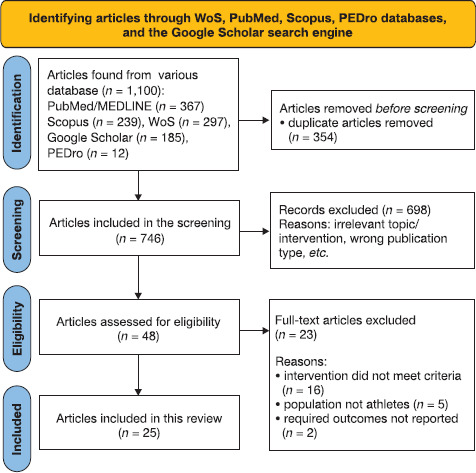
The initial search across databases and other sources yielded a total of 1,100 records. After the removal of 354 duplicate records, 746 unique articles remained for title and abstract screening. During this first screening phase, 698 articles were excluded as they did not meet the eligibility criteria (e.g., irrelevant population or intervention, incorrect study type). Subsequently, the full texts of the remaining 48 articles were retrieved and assessed for eligibility. Of these, 23 articles were excluded for the following reasons: the intervention did not meet the specific criteria of the review (n = 16), the study population was not composed of athletes (n = 5), and the required outcome data were not reported (n = 2). Ultimately, a total of 25 studies met all inclusion criteria and were included in this systematic review. The detailed process of study identification, screening, and selection is illustrated in the PRISMA 2020 flow diagram (Figure 1).
Study characteristics
A total of 25 studies, comprising 22 randomised controlled trials (including 4 cluster-RCTs) and 3 quasi-experimental studies, were included in this review. In cluster-RCTs, teams (or clubs) were the unit of randomisation, and injury-incidence effects are reported using the author-reported adjusted estimates. The total number of participants across all studies was 2,613 athletes. The publication years ranged from 2011 to 2025. The majority of studies focused on male football (soccer) players, spanning across various levels of competition from elite youth (e.g., U14–U19) to amateur and professional adult athletes. Other athletic populations included elite sprinters and jumpers, Gaelic footballers, and general recreationally active individuals. While most participants were male, female athletes were under-represented: one trial enrolled exclusively female football players, one study enrolled equal numbers of males and females, and four mixed-sex studies did not report sex-disaggregated counts.
The evidence base was predominantly male: 19/25 studies (76%) enrolled exclusively male cohorts (n = 2,364), while one study enrolled exclusively female football players (n = 45). One additional study enrolled an equal number of male and female athletes (12/12), whereas four mixed-sex studies (n = 180) did not report sex-specific counts. Therefore, at least 2,376 participants ( 90.9%) were male, and only 57 participants (2.2%) were confirmed female, underscoring a marked sex-based evidence gap. Most studies were conducted in football (soccer): 18/25 studies (72%), comprising 2,331 participants (89.2%). Notably, 15 of these were male-only soccer cohorts (n = 2,187; 83.7% of the total sample).
The interventions investigated were predominantly based on the Nordic Hamstring Exercise (NHE), with studies examining its efficacy in prevention and rehabilitation, and comparing different volumes, timing, and variations (e.g., assisted vs. standard). A smaller subset of studies investigated the Askling L-Protocol as a rehabilitation strategy following acute hamstring injury. Across the included studies, intervention duration varied substantially, ranging from 4 weeks to an entire 27-week competitive season. The most commonly reported outcomes across the studies were hamstring injury incidence/recurrence, time to return to sport, eccentric hamstring strength, and measures of athletic performance such as sprint and jump ability. A detailed summary of the characteristics of each included study is presented in Table 3.
Table 3
Characteristics and key findings of included studies
| Author, year | Study design | Participants (n, sex, age) | Sport and level | Intervention group(s) | Intervention details (duration, freq, vol, progression) | Comparison group details | Key outcomes measured | Eccentric strength change (%) | BFlh fascicle length change (%) | Key neuromuscular/kinematic findings | Functional performance outcomes |
|---|---|---|---|---|---|---|---|---|---|---|---|
| Askling et al. (2013) [15] | RCT | n = 75, M/F, 15–37 yrs | football, elite | L-Protocol (n = 37) | rehab programme until RTS criteria are met, based on lengthening exercises (Extender, Diver, Glider) and progressive loading | C-Protocol (n = 38), conventional exercises (stretching, pelvic lift) | primary: time to RTS, secondary: reinjury rate | NR | NR | reduced “insecurity” on H-test compared to C-Protocol | faster RTS, RTS: 28 ± 15 vs. 51 ± 21 days; p < 0.001; 95% CIs not reported |
| Askling et al. (2014) [25] | RCT | n = 56, M/F, 15–29 yrs | sprints/ jumps, elite | L-Protocol (n = 28) | rehab programme until RTS criteria are met: lengthening exercises and progressive loading | C-Protocol (n = 28), conventional exercises | primary: time to RTS, secondary: reinjury rate | NR | NR | 29% of the L-Protocol group reported “insecurity” on the H-test vs. 68% in the C-Protocol | faster RTS, RTS: 49 ± 26 vs. 86 ± 34 days; p < 0.001; Cohen’s d = –1.21; 95% CIs not reported |
| Alonso- Fernandez et al. (2022) [6] | RCT | n = 28, M, 25.1 ± 3.1 yrs | various, recreational | L-Protocol (n = 14) | 8 weeks, daily/every other day freq, volume: 3 sets × 4–12 reps depending on exercise | no training control group (n = 14) | flexibility (ROM), BFlh architecture, and sprint performance | NR | No significant change | improved hip flexibility (+13.22%) | no significant change in the sprint |
| Adıgüzel et al. (2024) [26] | RCT | n = 40, M, U17 | football, youth | NHE (n = 20) | 8 weeks, 2×/week, volume progressed from 2×5 to 3×10 reps | standard football training (n = 20) | linear speed, COD, CMJ, eccentric strength (NHCBP angle) | +25% (NHCBP angle) | NR | NR | 8% COD, 18% CMJ, no significant change in linear sprint |
| Amundsen et al. (2022) [27] | RCT | n = 45, F | football, youth | high-vol NHE (n = 23) vs. low-vol NHE (n = 22) | 8 weeks, high-vol: 21 sessions, 538 reps, low-vol: 10 sessions, 144 reps | comparison between high- and low-volume groups | eccentric strength, jump height, and sprint performance | +10–13% (no difference between groups) | NR | NR | no significant change in sprint or jump |
| Bourne et al. (2017) [28] | RCT | n = 30, M, 22.0 ± 3.6 yrs | various, recreational | NHE (n = 10) vs. hip extension (HE) (n = 10) | 10 weeks. progressive volume | no training control group (n = 10) | BFlh fascicle length, hamstring muscle volume | NR | +12.9% (NHE group) | NR | NR |
| Delahunt et al. (2016) [29] | RCT | n = 29, M, 20–24 yrs | various, recreational | NHE (n = 15) | 6 weeks, 15 sessions, progressive volume from 2×6 to 3×10 reps | no intervention control group (n = 14) | eccentric strength, kinematics, EMG activity | significant increase (15%) | NR | hamstring EMG, co-activation index, and improved kinematic control of fall | NR |
| Elerian et al. (2019) [30] | RCT | n = 34, M, 21–35 yrs | football, professional | NHE pre + post (n = 17) vs. NHE pre-only (n = 17) | 12 weeks, 2×/week (except week 1), progressive volume | historical control (previous season) | injury incidence, recurrence, and severity (days lost) | NR | NR | NR | NR |
| Farahbakhsh et al. (2023) [31] | RCT | n = 26, M, 16–19 yrs | football, youth | standard NHE (n = 13) vs. modified NHE (withhold) (n = 13) | 6 weeks, 15 sessions, progressive volume | comparison between the two NHE groups | EMG activity of hamstring, hip, and trunk muscles; sprint performance | NR | NR | EMG activity in hamstrings, gluteus maximus, and erector spinae | no significant change in the sprint |
| Hasebe et al. (2020) [32] | cluster- RCT | n = 259, M | football, high school | NHE (n = 130) | 27 weeks, progressive volume based on Mjølsnes et al. (2004) [33] protocol | control group (regular training) (n = 129) | injury rate, time- lost-to-injury rate, injury severity | NR | NR | NR | NR |
| Ishøi et al. (2018) [34] | RCT | n = 25, M, 17–26 yrs | football, amateur | NHE (n = 11) | 10 weeks, in-season, progressive volume (Mjølsnes et al., 2004 [33] protocol) | do-as-usual control group (n = 14) | repeated-sprint performance, eccentric strength | +19.2% | NR | NR | 10m sprint time (–0.047 s) |
| Ishøi et al. (2025) [35] | RCT | n = 31, M, U14–U15 | football, elite youth | assisted NHE (A-NHE) (n = 16) vs. standard NHE (n = 15) | 8 weeks, progression from heavy to light assistance for A-NHE | comparison between A-NHE and NHE | eccentric strength, muscle soreness, and perceived exertion | +20% (no difference between groups) | NR | The A-NHE group reported significantly lower muscle soreness and perceived exertion | NR |
| Lacome et al. (2020) [36] | cross- over RCT | N = 19, M, U19 | football, elite youth | low-vol NHE+SLDL (n = 19) vs. high- vol NHE+SLDL (n = 19) | 6 weeks, low-vol: 1 set/exercise, high-vol: 4 sets/exercise | crossover design | eccentric strength, BFlh and SM fascicle length | +11% (no difference between groups) | +4.5% BFlh, +4.3% SM (low-vol) | NR | NR |
| Lovell et al. (2018) [37] | RCT | n = 35, M, amateur | football, amateur | NHE before training (n = 10) vs. NHE after training (n = 14) | 12 weeks, progressive volume | core stability control group (n = 11) | eccentric strength, EMG activity, and muscle architecture | eccentric strength, EMG activity, and muscle architecture | significant increase in both groups | NHE before: FL, NHE after: muscle thickness | EMG activity reported |
| Macdonald et al. (2019) [38] | RCT | n = 12, M, 25.17 yrs | Gaelic football (prior HSI) | single-leg Roman chair hold (n = 6) vs. NHE (n = 6) | 6 weeks, 15 sessions, progressive loading | comparison between the two exercise groups. | hamstring strength-endurance (SLHB test) | no significant change in strength- endurance for the NHE group | NR | NR | NR |
| Mendiguchia et al. (2015) [39] | RCT | n = 51, M | football, youth | neuromuscular training (incl. eccentrics) (n = 27) | 7 weeks, 3 sessions/week. Each session included ec- centric strengthening exer- cises (e.g., Nordic hamstring exercise), plyometric drills (e.g., drop jumps), and sprint- ing drills. Volume for each exercise type was progres- sively increased (sets/reps for eccentric exercises and plyometrics; 20m sprints with increasing intensity). Progression was based on daily monitoring of perfor- mance and fatigue | regular football training control (n = 24) | isokinetic strength (con/ecc), sprint performance | +13% (approx.) | NR | NR | 5m sprint performance |
| Petersen et al. (2011) [40] | cluster- RCT | n = 942, M | football, pro/amateur | NHE (n = 461) | 10-week programme + weekly maintenance during season | usual training control group (n = 481) | overall, new and recurrent injury rates, adjusted RR = 0.293; recurrence RR = 0.137; 95% CI = 0.150–0.572; p = 0.003 | NR | NR | NR | NR |
| Pippas et al. (2025) [41] | quasi-exp | n = 38, M, 15–16 yrs | football, youth | NHE + Copenhagen adduction (n = 38) | 4 weeks, 2×/week, progressive volume | no control group (pre-post design) | isometric hamstring strength, eccentric hip adduction strength, jump and sprint performance, sprint time improved by 3%; p = 0.02 | NR | NR | NR | no significant change in jump or sprint |
| Raya-González et al. (2023) [42] | pro-spec-tive cohort | n = 49, M, U19 | football, elite youth | NHE + sprint training (n = 23) | 14 weeks, 3 sessions/weekNHE exercises (e.g., Nordic hamstring exercise) were performed in the first 10 minutes of each session. Sprint drills (e.g., 10m sprints) were included in the later part of each session, with the volume progressing as follows: 3 sets of 10 repetitions (week 1) to 5 sets of 20 repetitions (week 14). Progression was monitored using individual performance metrics (speed and fatigue). | control season (previous year’s data) (n = 26) | injury incidence and burden, sprint and COD performance | NR | NR | NR | significant improvements in sprint and COD performance |
| Rey et al. (2017) [43] | RCT | n = 47, M, 17.7 yrs | football, elite junior | NHE (n = 16) vs. Russian belt (RB) (n = 15) | 10 weeks, 27 sessions, progressive volume | regular football training control (n = 16) | strength-endurance (SLHB test), bilateral asymmetry | NR | NR | The NHE group had a significant decrease in bilateral asymmetry | NR |
| Ribeiro-Alvares et al. (2018) [9] | RCT | n = 20, M/F, 18–35 yrs | various, physically active | NHE (n = 10) | 4 weeks, 2×/week, progressive volume from 3×6 to 3×10 reps | no intervention control group (n = 10) | isokinetic strength, BFlh architecture, and flexibility | +13% | +22% | NR | NR |
| Shirmoham-madi and Zarei (2024) [44] | quasi-exp | n = 24, 12M/12F, 16–20 yrs | football, youth | NHE (n = 24) | 6 weeks, 15 sessions, progressive volume | comparison between male and female groups | isokinetic strength (con/ecc), H: Q ratio | significant increase in eccentric strength | NR | NR | NR |
| Silder et al. (2013) [45] | RCT | n = 29, M/F | various sports, athletes | PATS programme (n = 15) vs. PRES programme (incl. eccentrics) (n = 14) | The rehabilitation programme consisted of eccentric strengthening (e.g., Nordic hamstring exercises), plyometrics (e.g., drop jumps), and sprinting drills. The programme lasted until athletes met RTS criteria (full recovery, readiness for sports). Frequency was 3 sessions/week. Volume increased progressively: eccentric sets started at 2 sets of 6–8 repetitions and progressed to 3 sets of 10; sprinting volume increased from 2 sets of 10m sprints to 5 sets of 40m sprints. | comparison between the two rehab groups | RTS, reinjury rate, clinical and morphological measures | NR | NR | comparison of rehab programmes with different neuro-muscular focus (trunk/agility vs. running/ecc) | similar RTS between groups |
| van der Horst et al. (2015) [20] | cluster- RCT | n = 579, M, 24.5 yrs | football, amateur | NHE (n = 292) | 13 weeks, 25 sessions, progressive volume | regular soccer training control (n = 287) | injury incidence, injury severity. OR = 0.282; 95% CI = 0.110– 0.721; p = 0.005 | NR | NR | NR | NR |
| Vermeulen et al. (2022) [46] | RCT | n = 90, M, 18–36 yrs | various sports, athletes | early lengthening (n = 45) vs. delayed lengthening (n = 45) | The rehabilitation programme was designed with early vs delayed introduction of lengthening exercises. In the early group, eccentric exercises (e.g., Nordic hamstring exercise) began in the first week; in the delayed group, lengthening exercises began in week 4. Frequency was 3 sessions/ week. Progression for lengthening exercises started with 2 sets of 6 repetitions and progressed to 3 sets of 10 repetitions by week 14. Sprinting drills increased in volume from 2 sets of 10m sprints to 5 sets of 40m sprints by week 14. | comparison between the early and delayed groups | time to RTS, reinjury rate, strength, and H-test | The early group showed significantly higher eccentric strength at RTS. | NR | no difference in RTS based on timing of lengthening exercise introduction. | similar RTS between groups, RTS: 23 vs. 33 days; p = 0.84; 95% CIs not reported |
[i] A-NHE – assisted Nordic Hamstring Exercise, approx. – approximately, BFlh – biceps femoris long head, CI – confidence interval, CMJ – countermovement jump, COD – change of direction, con/ecc – concentric/eccentric, C-Protocol – conventional rehabilitation protocol, EMG – electromyography, F – female, FL – fascicle length, freq. – frequency, H:Q – hamstring-toquadriceps ratio, HE – hip extension, HIS – hamstring strain injury, H-test – Askling H-test, incl. – including, L-Protocol – Askling lengthening protocol, M – male, M/F – male/female, NHE – Nordic Hamstring Exercise, NHCBP – Nordic Hamstring Curl Breaking Point angle, NR – not reported, OR – odds ratio, PATS – progressive agility and trunk stabilization, PRES – progressive running and eccentric strengthening, Quasi-exp – quasi-experimental, RB – Russian Belt, RCT – randomized controlled trial, reps – repetitions, ROM – range of motion, RR – risk ratio, RTS – return to sport, SLDL – stiff-leg deadlift, SLHB – single-leg hamstring bridge, SM – semimembranosus, U14–U15 – under 14–15 years, U17 – under 17 years, U19 – under 19 years, Vol – volume, yrs – years
Methodological quality
The methodological quality of the 25 included studies was assessed using the Downs and Black checklist, with scores ranging from 18 to 27 out of a maximum possible score of 32 (mean score: 23.4 ± 2.9). Overall, the quality of the included studies was moderate to high. Most studies demonstrated strong reporting of primary objectives, participant characteristics, and intervention details. However, common methodological limitations were identified across the literature. Specifically, no study was able to blind participants to the intervention (Q24), which is a common and often unavoidable issue in exercise-based trials. Furthermore, many studies did not adequately report adjustments for loss to follow-up in their analyses (Q26) or failed to provide an a priori sample size calculation (Q27). A detailed item-by-item scoring for each study is presented in Table 4.
Table 4
Methodological quality assessment using the downs and black checklist
| Author, year | Q1 | Q2 | Q3 | Q4 | Q5 | Q6 | Q7 | Q8 | Q9 | Q10 | Q11 | Q12 | Q13 | Q14 | Q15 | Q16 | Q17 | Q18 | Q19 | Q20 | Q21 | Q22 | Q23 | Q24 | Q25 | Q26 | Q27 | Total (/32) |
|---|---|---|---|---|---|---|---|---|---|---|---|---|---|---|---|---|---|---|---|---|---|---|---|---|---|---|---|---|
| Askling et al. (2013) [15] | 1 | 1 | 1 | 1 | 1 | 1 | 1 | 1 | 1 | 2 | 1 | 1 | 1 | 1 | 1 | 1 | 1 | 1 | 1 | 0 | 1 | 1 | 1 | 0 | 1 | 0 | 1 | 25 |
| Askling et al. (2014) [25] | 1 | 1 | 1 | 1 | 1 | 1 | 1 | 1 | 1 | 2 | 1 | 1 | 1 | 1 | 1 | 1 | 1 | 1 | 1 | 0 | 1 | 1 | 1 | 0 | 1 | 0 | 2 | 26 |
| Alonso-Fernandez et al. (2022) [6] | 1 | 1 | 1 | 1 | 1 | 1 | 1 | 0 | 1 | 2 | 1 | 1 | 0 | 1 | 1 | 1 | 1 | 1 | 1 | 0 | 1 | 1 | 1 | 0 | 1 | 0 | 2 | 24 |
| Adıgüzel et al. (2024) [26] | 1 | 1 | 1 | 1 | 1 | 1 | 1 | 0 | 1 | 1 | 1 | 1 | 0 | 1 | 1 | 0 | 1 | 1 | 1 | 0 | 1 | 1 | 1 | 0 | 1 | 0 | 1 | 22 |
| Amundsen et al. (2022) [27] | 1 | 1 | 1 | 1 | 1 | 1 | 1 | 1 | 1 | 2 | 1 | 1 | 1 | 1 | 1 | 1 | 1 | 1 | 1 | 0 | 1 | 0 | 1 | 0 | 1 | 0 | 1 | 25 |
| Bourne et al. (2017) [28] | 1 | 1 | 1 | 1 | 1 | 1 | 1 | 1 | 1 | 2 | 1 | 1 | 1 | 1 | 1 | 1 | 1 | 1 | 1 | 0 | 1 | 1 | 1 | 0 | 1 | 0 | 2 | 26 |
| Delahunt et al. (2016) [29] | 1 | 1 | 1 | 1 | 1 | 1 | 1 | 0 | 1 | 2 | 1 | 1 | 0 | 1 | 1 | 1 | 1 | 1 | 1 | 0 | 1 | 0 | 1 | 0 | 1 | 0 | 1 | 23 |
| Elerian et al. (2019) [30] | 1 | 1 | 1 | 1 | 1 | 1 | 1 | 0 | 0 | 1 | 1 | 1 | 0 | 1 | 0 | 1 | 1 | 1 | 1 | 0 | 1 | 1 | 1 | 0 | 1 | 0 | 1 | 21 |
| Farahbakhsh et al. (2023) [31] | 1 | 1 | 1 | 1 | 1 | 1 | 0 | 0 | 1 | 1 | 1 | 1 | 0 | 1 | 1 | 0 | 1 | 1 | 1 | 0 | 1 | 1 | 1 | 0 | 1 | 0 | 0 | 20 |
| Hasebe et al. (2020) [32] | 1 | 1 | 1 | 1 | 1 | 1 | 1 | 0 | 1 | 2 | 1 | 1 | 1 | 1 | 1 | 1 | 1 | 1 | 1 | 0 | 1 | 0 | 1 | 0 | 1 | 0 | 1 | 24 |
| Ishøi et al. (2018) [34] | 1 | 1 | 1 | 1 | 1 | 1 | 1 | 1 | 1 | 2 | 1 | 1 | 1 | 1 | 1 | 0 | 1 | 1 | 1 | 1 | 1 | 0 | 1 | 0 | 1 | 0 | 1 | 25 |
| Ishøi et al. (2025) [35] | 1 | 1 | 1 | 1 | 1 | 1 | 1 | 1 | 1 | 2 | 1 | 1 | 1 | 1 | 1 | 1 | 1 | 1 | 1 | 1 | 1 | 0 | 1 | 0 | 1 | 0 | 1 | 26 |
| Lacome et al. (2020) [36] | 1 | 1 | 1 | 1 | 1 | 1 | 1 | 1 | 1 | 2 | 1 | 1 | 0 | 1 | 1 | 1 | 1 | 1 | 1 | 0 | 1 | 0 | 1 | 0 | 1 | 0 | 2 | 24 |
| Lovell et al. (2018) [37] | 1 | 1 | 1 | 1 | 1 | 1 | 1 | 1 | 1 | 2 | 1 | 1 | 0 | 1 | 1 | 1 | 1 | 1 | 1 | 0 | 1 | 1 | 1 | 0 | 1 | 0 | 2 | 25 |
| Macdonald et al. (2019) [38] | 1 | 1 | 1 | 1 | 1 | 1 | 1 | 0 | 1 | 1 | 1 | 1 | 0 | 1 | 1 | 0 | 1 | 1 | 1 | 0 | 1 | 1 | 1 | 0 | 1 | 0 | 2 | 22 |
| Mendiguchia et al. (2015) [39] | 1 | 1 | 1 | 1 | 1 | 1 | 1 | 0 | 1 | 2 | 1 | 1 | 0 | 1 | 1 | 1 | 1 | 1 | 1 | 0 | 1 | 0 | 1 | 0 | 1 | 0 | 1 | 23 |
| Petersen et al. (2011) [40] | 1 | 1 | 1 | 1 | 1 | 1 | 1 | 1 | 1 | 2 | 1 | 1 | 1 | 1 | 1 | 1 | 1 | 1 | 1 | 1 | 1 | 1 | 1 | 0 | 1 | 0 | 2 | 27 |
| Pippas et al. (2025) [41] | 1 | 1 | 1 | 1 | 1 | 1 | 0 | 0 | 1 | 1 | 1 | 1 | 0 | 0 | 0 | 1 | 1 | 1 | 1 | 0 | 1 | 0 | 1 | 0 | 1 | 0 | 1 | 18 |
| Raya-González et al. (2023) [42] | 1 | 1 | 1 | 1 | 1 | 1 | 0 | 0 | 1 | 1 | 1 | 1 | 0 | 0 | 0 | 1 | 1 | 1 | 1 | 0 | 1 | 1 | 1 | 0 | 1 | 0 | 1 | 19 |
| Rey et al. (2017) [43] | 1 | 1 | 1 | 1 | 1 | 1 | 1 | 0 | 1 | 1 | 1 | 1 | 0 | 1 | 1 | 0 | 1 | 1 | 1 | 0 | 1 | 1 | 1 | 0 | 1 | 0 | 2 | 22 |
| Ribeiro-Alvares et al. (2018) [9] | 1 | 1 | 1 | 1 | 1 | 1 | 1 | 1 | 1 | 1 | 1 | 1 | 0 | 1 | 1 | 1 | 1 | 1 | 1 | 0 | 1 | 0 | 1 | 0 | 1 | 0 | 1 | 23 |
| Shirmohammadi and Zarei (2024) [44] | 1 | 1 | 1 | 1 | 1 | 0 | 0 | 0 | 1 | 1 | 1 | 1 | 0 | 0 | 0 | 1 | 1 | 1 | 1 | 0 | 1 | 1 | 1 | 0 | 1 | 0 | 1 | 19 |
| Silder et al. (2013) [45] | 1 | 1 | 1 | 1 | 1 | 1 | 1 | 1 | 1 | 2 | 1 | 1 | 0 | 1 | 1 | 1 | 1 | 1 | 1 | 1 | 1 | 0 | 1 | 0 | 1 | 0 | 1 | 24 |
| van der Horst et al. (2015) [20] | 1 | 1 | 1 | 1 | 1 | 1 | 1 | 1 | 1 | 2 | 1 | 1 | 1 | 1 | 1 | 1 | 1 | 1 | 1 | 1 | 1 | 0 | 1 | 0 | 1 | 0 | 2 | 26 |
| Vermeulen et al. (2022) [46] | 1 | 1 | 1 | 1 | 1 | 1 | 1 | 1 | 1 | 2 | 1 | 1 | 1 | 1 | 1 | 1 | 1 | 1 | 1 | 1 | 1 | 1 | 1 | 0 | 1 | 0 | 2 | 27 |
| Total score (n= 25) | 25 | 25 | 25 | 25 | 25 | 24 | 22 | 14 | 23 | 45 | 25 | 25 | 11 | 22 | 21 | 20 | 25 | 25 | 25 | 6 | 25 | 15 | 25 | 0 | 25 | 0 | 38 | – |
Risk-of-bias
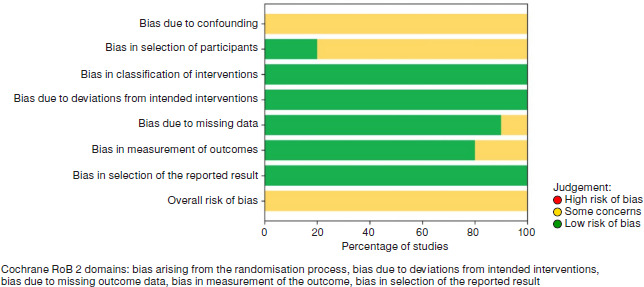
Risk-of-bias was assessed for all 25 included studies. Among the 22 randomised controlled trials evaluated using the Cochrane Risk of Bias 2 (RoB 2) tool (Figure 2), 12 studies (55%) were judged to be at an overall low risk of bias, 8 (36%) raised some concerns, and 2 (9%) were judged to be at high risk of bias. Across the five RoB 2 domains, most trials showed low risk for missing outcome data and measurement of outcomes, with occasional concerns mainly related to incomplete follow-up and limited blinding of outcome assessors. Selection of the reported result was generally rated as low risk, suggesting no clear evidence of selective reporting. In contrast, deviations from intended interventions were the most common driver of “some concerns” or “high risk” judgements, largely reflecting the practical difficulty of blinding participants and personnel in exercise-based interventions. Bias arising from the randomisation process also raised concerns in some studies, typically due to insufficient reporting of allocation concealment or potential baseline imbalances. Overall, these findings indicate that the randomised evidence is methodologically acceptable, although results should be interpreted with caution, particularly regarding randomisation procedures and deviations from intended interventions.
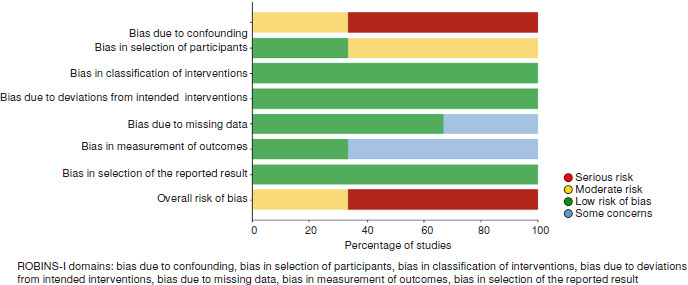
The risk of bias in the three quasi-experimental studies was assessed using the ROBINS-I tool across seven domains (Figure 3). One study (33%) was judged to have a moderate risk of bias, while two studies (67%) had a serious risk of bias. The primary source of potential bias was confounding, with a substantial proportion of studies rated as serious risk, reflecting the inherent limitations of non-randomised designs and incomplete control over baseline differences between intervention and comparison groups. Selection bias was generally rated as moderate, indicating potential issues with participant selection, but without clear evidence of systematic distortion.
Bias in the classification of interventions and deviations from intended interventions were consistently rated as low risk, suggesting that interventions were well defined, classified correctly, and largely delivered as planned. Bias in outcome integrity showed a mixed pattern: while most studies had low risk for missing data and measurement of outcomes, some studies raised moderate concerns, mainly due to incomplete follow-up or limited blinding of outcome assessors. Selection of the reported result was uniformly rated as low risk, indicating no selective outcome reporting.
Overall, while the quasi-experimental studies exhibited acceptable methodological quality in several ROBINS-I domains, the serious risk-of- bias due to confounding highlights the need for cautious interpretation. These results suggest that quasi-experimental studies should be considered complementary to randomised controlled trials rather than definitive evidence of causality.
The detailed domain-level judgements for all included studies are provided in Table 5. Certainty of evidence for the main outcomes was assessed using GRADE and is summarised in Table 6.
Table 5. Risk-of-bias assessment using Cochrane RoB 2 (for RCTs) and ROBINS-I (for quasi-experimental studies)
| Author, year | Study design | D1 | D2 | D3 | D4 | D5 | D6 | D7 | Overall bias |
|---|---|---|---|---|---|---|---|---|---|
| Askling et al. (2013) [15] | RCT | low risk | some concerns | low risk | low risk | low risk | – | – | some concerns |
| Askling et al. (2014) [25] | RCT | low risk | low risk | low risk | low risk | low risk | – | – | low risk |
| Alonso-Fernandez et al. (2022) [6] | RCT | some concerns | some concerns | low risk | low risk | low risk | – | – | some concerns |
| Adıgüzel et al. (2024) [26] | RCT | some concerns | high risk | low risk | low risk | some concerns | – | – | some concerns |
| Amundsen et al. (2022) [27] | RCT | low risk | low risk | low risk | low risk | low risk | – | – | low risk |
| Bourne et al. (2017) [28] | RCT | low risk | low risk | low risk | low risk | low risk | – | – | low risk |
| Delahunt et al. (2016) [29] | RCT | some concerns | high risk | low risk | low risk | low risk | – | – | some concerns |
| Elerian et al. (2019) [30] | RCT | high risk | high risk | low risk | some concerns | some concerns | – | – | high risk |
| Farahbakhsh et al. (2023) [31] | RCT | high risk | high risk | some concerns | low risk | some concerns | – | – | high risk |
| Hasebe et al. (2020) [32] | cluster-RCT | some concerns | some concerns | low risk | low risk | low risk | – | – | some concerns |
| Ishøi et al. (2018) [34] | RCT | low risk | some concerns | low risk | low risk | low risk | – | – | low risk |
| Ishøi et al. (202)5 [35] | RCT | low risk | low risk | low risk | low risk | low risk | – | – | low risk |
| Lacome et al. (2020) [36] | RCT | low risk | low risk | low risk | low risk | low risk | – | – | low risk |
| Lovell et al. (2018) [37] | RCT | some concerns | some concerns | low risk | low risk | some concerns | – | – | some concerns |
| Macdonald et al. (2019) [38] | RCT | some concerns | high risk | low risk | some concerns | low risk | – | – | some concerns |
| Mendiguchia et al. (2015) [39] | RCT | some concerns | some concerns | low risk | some concerns | low risk | – | – | some concerns |
| Petersen et al. (2011) [40] | cluster-RCT | low risk | low risk | low risk | low risk | low risk | – | – | low risk |
| Rey et al. (2017) [43] | RCT | some concerns | high risk | low risk | some concerns | some concerns | – | – | some concerns |
| Ribeiro-Alvares et al. (2018) [9] | RCT | low risk | low risk | low risk | low risk | low risk | – | – | low risk |
| Silder et al. (2013) [45] | RCT | some concerns | some concerns | low risk | low risk | low risk | – | – | some concerns |
| van der Horst et al. (2015) [20] | cluster-RCT | low risk | low risk | low risk | low risk | low risk | – | – | low risk |
| Vermeulen et al. (2022) [46] | RCT | low risk | low risk | low risk | low risk | low risk | – | – | low risk |
| Pippas et al. (2025) [41] | quasi-exp | serious risk | moderate risk | low risk | low risk | some concerns | low risk | low risk | serious risk |
| Raya-González et al. (2023) [42] | quasi-exp | moderate risk | low risk | low risk | low risk | low risk | low risk | low risk | moderate risk |
| Shirmohammadi and Zerwi (2024) [44] | quasi-exp | serious risk | moderate risk | low risk | low risk | low risk | some concerns | low risk | serious risk |
[i] The Cochrane RoB 2 tool was used for randomised controlled trials (RCTs), and the ROBINS-I tool was used for quasi-experimental studies. RCT – randomized control trial
Cochrane RoB 2 domains: D1 – bias arising from the randomisation process, D2 – bias due to deviations from intended interventions, D3 – bias due to missing outcome data, D4 – bias in measurement of the outcome, D5 – bias in selection of the reported result; judgements are “low risk”, “some concerns”, or “high risk” ROBINS-I Domains: D1 – bias due to confounding, D2 – bias in selection of participants, D3 – bias in classification of interventions, D4 – bias due to deviations from interventions, D5 – bias due to missing data, D6 – bias in measurement of outcomes, D7 – bias in selection of the reported result; judgments are “low”, “moderate”, “serious”, or “critical” risk
Table 6
GRADE summary of findings (certainty of evidence) for main outcomes
| Overall included evidence: 25 studies (n= 2,613). Counts below are outcome-specific and not additive (participants may overlap across outcomes). | |||||
|---|---|---|---|---|---|
| Outcome | No. of studies (design) | Participants (n) | Summary of effect (descriptive) | Certainty (grade) | Main reasons for rating |
| Hamstring injury incidence /recurrence (prevention trials; NHE programmes) | 5 studies (3 cluster-RCTs, 1 RCT with historical control, 1 prospective cohort) | 1,863 | Two large cluster-RCTs in male football reported substantially lower hamstring injury risk with NHE programmes (Petersen et al. [40], adjusted RR0.293, 95% CI0.150– 0.572; recurrent injuries RR0.137, 95% CI0.037–0.509; p= 0.003; van der Horst et al. [20], OR0.282, 95% CI0.110–0.721; p= 0.005). Other studies reported reduced severity/burden with mixed effects on incidence. | moderate | downgraded for indirectness (predominantly male football) and inconsistency; upgraded for large effect estimates in two large cluster-RCTs |
| Time to return to sport (rehabilitation; Askling L-Protocol /lengthening-based rehab) | 4 RCTs | 250 | Two Askling trials [15, 25] reported faster RTS with L-Protocol (mean differences 23 and 37 days; p< 0.001 in both Askling trials; 95% CIs not reported), whereas Vermeulen et al. [46] reported no RTS difference between early and delayed introduction of lengthening exercises; Silder et al. [45] reported similar RTS between rehabilitation programmes | low | downgraded for inconsistency and imprecision (few trials, variable rehab comparators), and indirectness (different rehab programmes/context) |
| Eccentric hamstring strength (NHE-based interventions) | 12 studies (10 RCTs, 2 quasiexperimental) | 365 | across multiple athletic cohorts, NHE programmes generally increased eccentric strength (commonly ~10–25%; e.g., Ishøi et al. [34] reported ECC-PHS +62.3 N; p= 0.006; d= 0.92 and ECC-CAPHS +951 N; p= 0.005; d= 0.95; 95% CIs not reported) | high | no serious concerns overall; some variability in measurement tools and dosing across studies, but direction of effect was consistently favourable |
[i] CI – confidence interval, ECC-CAPHS – eccentric hamstring strength capacity, ECC-PHS – peak eccentric hamstring strength, GRADE – Grading of Recommendations Assessment, Development and Evaluation, NHE – Nordic Hamstring Exercise, OR – odds ratio, RCT – randomised controlled trial, RR – risk ratio, RTS – return to sport
Effects of NHE-based interventions on hamstring injury incidence, recurrence, and burden
The preventive effect of the NHE on injury rates was demonstrated in several key trials. Petersen et al. [40] conducted a cluster-RCT with 942 male football (soccer) players and found that a 10-week NHE programme significantly reduced the overall acute hamstring injury rate compared with a control group (3.8 vs. 13.1 injuries per 100 player-seasons; adjusted rate ratio: RR = 0.293, 95% CI 0.150–0.572, as reported by the authors). The effect was particularly strong for recurrent injuries, with the NHE group showing a lower recurrence rate (RR = 0.137; 95% CI 0.037–0.509; p = 0.003), as reported by the authors [40]. In another large cluster-RCT involving 579 amateur football (soccer) players, van der Horst et al. [20] reported that a 13-week NHE protocol significantly reduced the odds of sustaining a hamstring injury (odds ratio = 0.282; 95% CI 0.110–0.721; p = 0.005) [20]. Supporting these findings, Elerian et al. [30] showed that intervention groups performing the NHE sustained substantially fewer injuries (1–4 total) compared with a historical control group from the previous season (20 injuries) [30]. In contrast, Hasebe et al. [32], in a study of 259 high school football (soccer) players, found no significant difference in the overall injury rate but did report significantly lower injury severity in the NHE group, measured by time lost to injury [32]. This finding is corroborated by Raya-González et al. [42], who found that a combined NHE and sprint training programme produced no significant difference in injury incidence but a significant reduction in injury burden (27.87 vs. 3.82 absence days/1,000 h of exposure, p < 0.001), suggesting that the neuromuscular adaptations render the muscle more resilient to severe damage [42].
Effect of lengthening-based rehabilitation on time to return to sport (RTS)
For rehabilitation, studies investigating the Askling L-Protocol consistently reported accelerated recovery times. In a trial with elite football players, Askling et al. [15] reported a significantly shorter mean time to return to sport with the L-Protocol compared with the conventional protocol (mean 28 ± 15 vs. 51 ± 21 days; p < 0.001; 95% CIs not reported) [15]. The same authors (Askling et al. [25]) replicated these findings in a cohort of elite sprinters and jumpers, again showing a shorter RTS for the L-Protocol group (mean 49 ± 26 days vs. 86 ± 34 days; p < 0.001; Cohen’s d = –1.21; 95% CIs not reported) [25]. A key finding that may explain this accelerated recovery is the L-Protocol’s effect on neuromuscular confidence; when assessed with the dynamic Askling H-test, 68% of athletes in the conventional programme reported experiencing insecurity, compared with only 29% in the L-Protocol group, indicating a superior restoration of functional neuromuscular control [25]. However, in a recent high-quality RCT, Vermeulen et al. [46] compared early vs. delayed introduction of lengthening exercises and found no significant difference in median RTS between the groups (23 vs. 33 days, p = 0.84), suggesting that the timing of these specific exercises within a broader rehabilitation context may not be the primary determinant of recovery duration [46].
Effect of NHE-based and alternative hamstring-strengthening interventions on hamstring strength
A primary adaptation reported across numerous studies was an increase in hamstring strength. For instance, Ishøi et al. [34] reported increases in eccentric strength outcomes in favour of NHE training in amateur football players, including ECC-PHS (+62.3 N; p = 0.006; d = 0.92) and ECC-CAPHS (+951 N; p = 0.005; d = 0.95); 95% CIs were not reported [34]. In a study on female footballers, Amundsen et al. [27] found that an 8-week NHE programme produced significant eccentric strength gains of 10–13%, with no difference observed between high-volume and low-volume training groups [27]. This suggests that even lower doses can be effective. Similarly, Lacome et al. [36] found that a low-volume programme (10 total reps/week) was as effective as a high-volume programme (40 total reps/week) in producing significant eccentric strength gains (~11%) in elite youth players. Delahunt et al. [29] also reported improved eccentric strength and optimised neuromuscular activation after a 6-week NHE programme in recreationally active men [29]. An important comparative finding highlighting the specificity of strength adaptation came from Macdonald et al. [38], who studied Gaelic footballers with a history of hamstring injury. Their results indicated that a 6-week isometric single-leg Roman chair hold programme was more effective at improving hamstring strength-endurance (a 23.7% improvement on the single-leg hamstring bridge test for the previously injured leg) than a 6-week NHE programme, which showed no significant improvement [38].
Effect of NHE training on neuromuscular control and kinematics
Beyond simple strength metrics, the reviewed studies provide direct evidence that eccentric training induces significant adaptations in neuromuscular control and movement patterns. Firstly, NHE training was shown to optimise muscle activation patterns. A 6-week programme resulted in a significant increase in electromyography (EMG) activity of the primary movers, biceps femoris [from 54.2% to 92.0% of maximum voluntary contraction (MVC)] and semitendinosus (from 56.6% to 83.2% of MVC), while significantly reducing the co-activation index of antagonist muscles, suggesting a more efficient and powerful neuromuscular output [29]. Further evidence for improved intermuscular coordination comes from findings that NHE also increases the activation of key kinetic chain stabilisers, including the gluteus maximus and erector spinae muscles [31]. Secondly, these neuromuscular changes translate into improved movement kinematics. The same 6-week NHE programme led to a significant improvement in players’ ability to control the eccentric lowering phase of the exercise, demonstrated by a shift in the “angle at downward acceleration” (73.7° vs. 68.1°, p = 0.022), indicating enhanced motor control at longer muscle lengths [29]. Finally, NHE training has been shown to correct neuromuscular imbalances. A 10-week programme significantly reduced bilateral strength asymmetry between limbs in elite junior players (p = 0.028), a key factor in mitigating unilateral injury risk [43].
Effect of NHE-based interventions and the Askling L-Protocol on athletic performance and muscle architecture
The influence of these exercise protocols on athletic performance yielded mixed results, with the transfer of strength appearing to be task-specific. Positive effects were reported by Ishøi et al. [34], who found small-to-medium improvements in 10-metre sprint performance (–0.047 s, p = 0.005). Similarly, and highlighting the specificity of adaptation, Adıgüzel et al. [26] reported that an 8-week NHE programme led to significant improvements in change of direction ability (+8%) and countermovement jump height (+18%) in youth footballers, although no change in linear sprint speed was observed. In contrast, other studies found no significant impact on performance; Amundsen et al. [27] and Pippas et al. [41] both reported no significant changes in sprint or jump performance following their respective interventions [27, 41].
Regarding structural changes, eccentric training consistently induced architectural adaptations. Bourne et al. [28] and Ribeiro-Alvares et al. [9] both reported significant increases in biceps femoris long head (BFlh) fascicle length after NHE training [9, 28]. This adaptation can occur rapidly, as Ribeiro-Alvares et al. [9] showed a 22% increase in fascicle length after just four weeks [9]. Notably, the type of architectural adaptation appears to be context-dependent; Lovell et al. [37] demonstrated that performing the NHE before football training was superior for increasing fascicle length, whereas performing it after training led to greater muscle hypertrophy. Furthermore, Alonso-Fernandez et al. [6] demonstrated that the Askling L-Protocol, in contrast to the NHE, did not alter muscle architecture but did significantly improve hamstring flexibility, increasing hip flexion range of motion by 13.22%, though this adaptation was not sustained after a 4-week detraining period.
Discussion
The primary aim of this systematic review was to evaluate and contrast the evidence for two prominent eccentric exercise protocols in the management of hamstring strain injuries (HSIs). The synthesis of 25 included studies suggests a division of roles: the Nordic Hamstring Exercise (NHE) is supported as a tool for the primary prevention of HSIs, while the Askling L-Protocol is supported as a strategy for the rehabilitation of acute injuries. Specifically, evidence from high-quality trials indicates that programmes incorporating the NHE are associated with lower injury incidence; for example, Petersen et al. [40] reported an adjusted RR of 0.293 (95% CI 0.150–0.572) for acute HSIs within that trial, while van der Horst et al. [20] found a significant reduction in injury risk among amateur players (odds ratio = 0.282; 95% CI 0.110–0.721; p = 0.005). Conversely, the Askling L-Protocol has been reported to reduce the time required for athletes to return to sport, with Askling et al. [15] reporting a mean RTS of 28 days for the L-Protocol group compared with 51 days for a conventional programme in elite football players (p < 0.001; 95% CIs not reported). Taken together, these findings suggest that while both protocols utilise eccentric loading, their optimal application may be specific to the stage of the athlete’s injury continuum. This apparent dichotomy raises a critical question: why are these protocols best suited for distinct clinical applications? This discussion explores their underlying neuromuscular and motor control mechanisms.
However, the strength of causal inference varies across outcomes and study designs. While randomised and cluster-randomised trials support causal interpretation within their study settings, heterogeneity and the inclusion of quasi-experimental and mechanistic evidence limit generalisability; therefore, mechanistic explanations are presented as plausible interpretations rather than confirmed causal pathways.
The consistent reduction in HSI rates observed in studies implementing the NHE may be explained by a series of beneficial neuromuscular and architectural adaptations. The most prominent adaptation is a substantial increase in eccentric knee flexor strength, a factor that may contribute to lower injury risk, with Ishøi et al. [34] reporting a large increase in peak eccentric strength after a 10-week in-season NHE programme (e.g., ECC-PHS +62.3 N; p = 0.006; d = 0.92; 95% CIs not reported). Beyond strength, NHE training has been associated with favourable changes in muscle architecture, most notably an increase in biceps femoris long head (BFlh) fascicle length, as reported by Bourne et al. [28] and Ribeiro-Alvares et al. [9]. A recent work strengthens this mechanistic interpretation and clarifies the characteristics of these architectural adaptations. Crawford et al. [12] reported that six weeks of twice-weekly eccentrically biased training increased biceps femoris long head fascicle length ( 9%) and hamstring cross-sectional area ( 10%), while pennation angle decreased and muscle thickness showed no meaningful change; importantly, the magnitude of change was not different between NHE and an eccentrically biased Romanian deadlift, suggesting that the broader eccentric stimulus may be more important than any single exercise selection [12]. At the programming level, Cholp and Zemková’s [13] systematic review and meta-analysis suggests that higher-volume Nordic protocols are more likely to produce measurable increases in fascicle length and muscle thickness, whereas the lower-volume ones may increase peak eccentric strength with limited or inconsistent architectural change, highlighting volume as a practical lever when targeting structure-based mechanisms [13]. This architectural adaptation is theorised to be highly protective; longer fascicles, representing more sarcomeres in series, allow the muscle to absorb more energy and operate at a less vulnerable, shorter portion of its length-tension curve during the high-speed demands of the late swing phase of sprinting [47]. However, a deeper analysis reveals that the NHE’s efficacy also stems from its profound impact on motor control. Evidence suggests that NHE training optimises neuromuscular patterns by not only increasing agonist hamstring muscle activation (EMG) but also significantly reducing antagonist co-activation, which may indicate a more efficient neuromuscular output [29]. Furthermore, there is evidence for improved kinetic chain coordination, as NHE has been reported to activate key stabiliser muscles such as the gluteus maximus and erector spinae [31]. Beyond isolated strength and structure, emerging evidence suggests potential transfer to functional control: a randomised controlled trial reported that four weeks of eccentric NHE training improved both static and dynamic postural stability in parallel with gains in knee strength [14]. Nevertheless, acute protocols of repeated NHE can transiently alter ham-string stiffness and ultrasound-derived morphology within the hours following exercise, underscoring the importance of fatigue management and session scheduling when interpreting neuromuscular and balance-related outcomes [48]. Finally, NHE training has been associated with reduced bilateral strength asymmetry, a key factor in mitigating unilateral injury risk [43]. Thus, the preventive benefit of the NHE may reflect not only a stronger and structurally more resilient muscle but also a more efficient and coordinated neuro-muscular system.
In the domain of rehabilitation, this review suggests the Askling L-Protocol may be effective in shortening an athlete’s return to sport (RTS) following an acute HSI. Two foundational RCTs reported this effect: Askling et al. [15] reported that elite football players using the L-Protocol returned to play 23 days sooner (mean 28 vs. 51 days), a finding replicated in elite sprinters and jumpers with a 37-day reduction in RTS (mean 49
vs. 86 days) [25]. The efficacy of the L-Protocol may be attributable to its unique focus on controlled, dynamic movements that load the hamstring complex through extensive lengthening, mimicking the demands of sprinting. Unlike the potentially supramaximal and isolated nature of the NHE, and in contrast to the NHE’s effect on muscle architecture, the L-Protocol does not appear to induce significant structural changes such as increased fascicle length (a non-significant change of –2.39%; p > 0.05) [6]. Instead, its primary mechanism appears to lie in motor re-learning and overcoming post-injury neuromuscular deficits. The L-Protocol’s exercises, the “Extender”, “Diver”, and “Glider”, emphasise neuromuscular control and intermuscular coordination. Further support for this interpretation comes from the protocol’s effect on restoring neuro-muscular confidence; in the study on sprinters, 68% of athletes in the conventional rehabilitation group reported experiencing “insecurity” during the H-test, whereas this figure was only 29% in the L-Protocol group [25]. This suggests the protocol may be more effective at overcoming the neuromuscular inhibition that often occurs post-injury. However, it is important to note that the specific timing of introducing these exercises may not be the sole determinant of success. A high-quality RCT by Vermeulen et al. [46] found no significant difference in median RTS between groups who began lengthening exercises early vs. later (23 vs. 33 days, p = 0.84), suggesting that the overall structure of the entire rehabilitation programme is a critical factor [46].
Across multiple studies, NHE-based programmes were associated with reduced injury incidence and improved eccentric strength outcomes; however, effect estimates varied and should be interpreted in the context of between-study heterogeneity and the risk-of-bias profile (see Table 3 and GRADE summary in Table 6). The translation of these substantial strength gains into direct improvements in athletic performance, such as sprinting and jumping, was less consistent. This discrepancy suggests that while eccentric strength is a critical component, the principle of training specificity plays a crucial role. On the one hand, some studies reported small-to-medium improvements in 10-metre sprint performance (a reduction of 0.047 s; p = 0.005, d = 0.64) [34], and Adıgüzel et al. [26] reported significant enhancements in change of direction ability (+8%; p < 0.004) and jump height (+18%; p < 0.001). Conversely, several other trials found no significant changes in sprint or jump performance following their interventions (Amundsen et al. [27]; p > 0.05), with one study even reporting a significant decrease in jump performance after their combined NHE programme [41]. This suggests that the transfer of strength from the NHE may be more pronounced in tasks highly dependent on eccentric braking and neuro-muscular control (such as change of direction) than in those reliant on linear power production. The importance of the specificity of the training stimulus was highlighted by Macdonald et al. [38], whose findings indicated that for improving hamstring strength-endurance, a 6-week isometric exercise programme was more effective than the NHE in that trial (a 23.7% improvement in the isometric group vs. a negligible 0.3% change in the NHE group for the previously injured leg). This underscores that training programmes must be carefully designed to match the specific neuromuscular demands of the desired athletic performance.
This review has several methodological strengths, including a comprehensive and reproducible search strategy across multiple databases and a rigorous dual-reviewer process for study selection, data extraction, and quality appraisal. A key strength and unique contribution of this review is its structured, systematic synthesis of the two leading protocols across the full injury continuum, highlighting their distinct, phase-specific roles in prevention vs. rehabilitation. This synthesis is intended to clarify complementary clinical applications rather than to imply a head-to-head comparison or to infer reinjury risk from cross-study contrasts. Future research should evaluate a sequential approach implementing the Askling L-Protocol during rehabilitation followed by a structured NHE programme after return to sport within prospective designs to more appropriately examine reinjury rates. Previous systematic reviews have typically focused on a narrower scope, examining either prevention strategies alone, such as the meta-analysis by van Dyk et al. [10] on the Nordic Ham-string Exercise, or focusing exclusively on rehabilitation protocols, as seen in the work by Abdulridha et al. [49]. While narrative reviews have previously acknowledged the different applications of these exercises [50], this paper is the first to systematically synthesise and contrast the evidence for both. Furthermore, this review offers a novel analytical lens by synthesising these findings through a unifying motor control framework, moving beyond simple outcomes to explain the underlying neuromuscular mechanisms, a perspective noted as underrepresented in prior literature.
However, these findings must be interpreted considering several limitations. First, there was considerable clinical and methodological heterogeneity across the 25 studies, which precluded a quantitative meta-analysis. Second, while many studies were of moderate-to-high quality, our risk-of-bias assessment revealed that several had “some concerns” or a “high/serious risk-of-bias”, which should temper the interpretation of their individual results. Additionally, an important limitation is that the included evidence is heavily concentrated in male football (soccer) cohorts, which constrains generalisability. Accordingly, the clinical implications in this review should be interpreted as most directly applicable to male soccer players, and extrapolation to female athletes should be made cautiously until adequately powered female-specific trials are available. While one randomised trial in female football players reported meaningful eccentric strength gains following Nordic training, evidence for injury-incidence reduction and for the Askling L-Protocol in female cohorts remains sparse [27]. Finally, publication bias and small-study effects cannot be excluded, particularly as preprint servers and trial registries were not searched systematically and unpublished/ongoing studies may therefore have been missed. Several outcomes were informed by small or single-centre studies and heterogeneous outcome definitions and metrics, which may inflate apparent effects and limit external validity. Because this review did not undertake quantitative meta-analysis and effect estimates were not sufficiently homogeneous and consistently reported across ≥ 10 comparable studies for any single outcome, formal small-study assessments (e.g., funnel plots) were not performed; this should be considered when interpreting the strength of the evidence.
Despite these limitations, this review provides clinically relevant implications. The available evidence supports a targeted approach: the NHE may be considered a primary strategy for injury prevention in healthy, at-risk athletes. For athletes recovering from an acute HSI, the Askling L-Protocol provides a framework supported by trial evidence for progressive rehabilitation aimed at supporting a timely and safe return to sport. This distinction underscores the importance of selecting interventions based on the specific clinical goal rather than viewing all eccentric exercises as interchangeable. From a motor control perspective, clinicians should consider these protocols not just as strength exercises, but as tools for neuromuscular re-education. For example, considering factors such as the timing of exercise can be critical for targeting specific adaptations; Lovell et al. [37] reported greater increases in fascicle length when the NHE was performed before training, whereas post-training application was associated with greater hypertrophy. Finally, while this review clarifies the distinct, evidence-based applications of the NHE and the Askling L-Protocol, it also illuminates several avenues for future research that are essential for advancing the management of HSIs.
Future research should prioritise female athletes, including soccer-specific cohorts, and routinely report sex-disaggregated outcomes (or sex-stratified analyses where appropriate). Trials should be designed to determine whether the preventive effects of NHE programmes and the rehabilitation benefits of the Askling L-Protocol observed predominantly in male cohorts translate to female athletes, and to identify whether dosing, adherence, and neuromuscular adaptations differ by sex. Prospective, randomised controlled trials directly comparing the efficacy of the NHE against the Askling L-Protocol within a rehabilitation context are also warranted to definitively determine the optimal strategy for post-injury recovery. Furthermore, future studies should aim to achieve a deeper understanding of these protocols’ neuromuscular mechanisms by directly measuring motor control variables (e.g., EMG time-series analysis, 3D kinematics) as primary outcomes. Investigating combined and periodised protocols, for example, using the Askling L-Protocol for rehabilitation followed by a low-volume NHE programme to maintain adaptations, could help develop more comprehensive and individualised clinical guidelines.
Conclusions
This systematic review, synthesising evidence from 25 trials, highlights a critical distinction in the management of hamstring strain injuries: the two leading eccentric exercise protocols, the NHE and the Askling L-Protocol, have distinct, non-overlapping roles. Evidence from the included trials supports the NHE as a primary strategy for injury prevention in healthy, at-risk athletes, whereas establishes the Askling L-Protocol as the preferred framework for rehabilitating acute injuries and accelerating a safe return to sport. This functional separation arises from their distinct neuromuscular and biomechanical mechanisms: the NHE induces protective adaptations, including increased fascicle length and enhanced neuromuscular control in healthy tissue, whereas the L-Protocol emphasises restoring movement efficiency and neuromuscular confidence post-injury. Consequently, these protocols should not be considered interchangeable. Practitioners, coaches, and athletes should select interventions according to the athlete’s position on the injury continuum, using the NHE for prevention and the L-Protocol for rehabilitation, to ensure a targeted, evidence-based approach to HSI management.